

Last Updated on September 24, 2026
“I’d love a wet room, but my bathroom is far too small.” It is the sentence we hear most often on home visits, and it is nearly always wrong. A wet room is the one bathroom layout that gets better as the room gets smaller, because it removes the two things that eat floor space in a compact UK bathroom: the bath, and the step-in shower tray that chops the room in half.
This guide collects the small wet room ideas our surveyors use most, from rooms of 1.2m x 1.2m upwards, with photos from our own installations, the minimum sizes that actually work, and what a downstairs cloakroom conversion involves. If you want tray-based options as well, our guide to walk-in shower layouts for small bathrooms covers those.
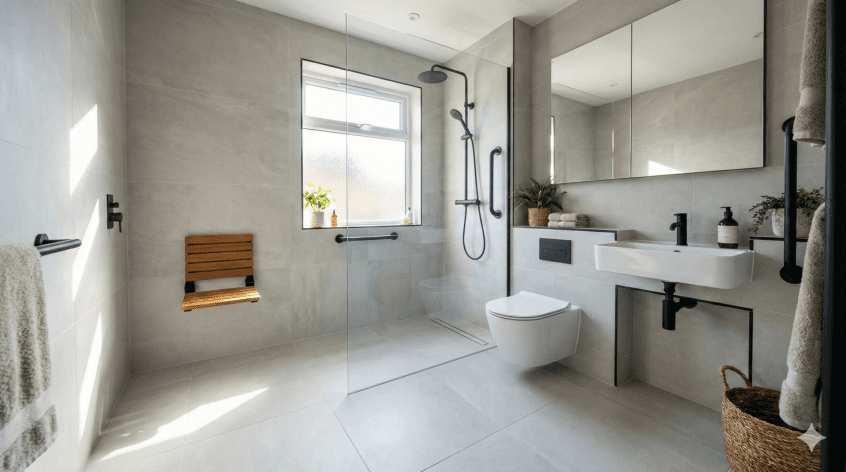
Want a small wet room fitted? This guide is for ideas and layouts. To see how we design and install small wet rooms, including downstairs toilet conversions, with a free home visit and 0% VAT if you qualify, visit our Small Wet Rooms page.
How small can a wet room be?
The honest answer is smaller than most people expect, provided the whole room is treated as the shower.
| Room size | What fits | Who it suits |
|---|---|---|
| 1.2m x 1.2m | Shower, wall-hung toilet, small corner basin; the whole floor is the wet zone | Downstairs cloakroom conversions; walking-frame users |
| 1.5m x 1.5m | Shower with fold-down seat, toilet, basin, room for a carer to stand alongside | Assisted showering; shower chair users |
| 1.7m x 2.0m (typical UK bathroom) | Full wet room with a 1500mm turning space, half-height screen, storage | Independent wheelchair use |
Two measurements matter more than the room’s footprint. The first is the doorway: a standard UK internal door gives a clear opening of around 700mm, and a wheelchair needs 800mm or more, so widening the door is often the first job. The second is the turning circle: 1500mm of clear floor lets a wheelchair turn without reversing, and in a wet room that circle can overlap the shower area, which is exactly why wet rooms suit small rooms so well.
12 small wet room ideas that give space back
1. Let the whole floor be the shower
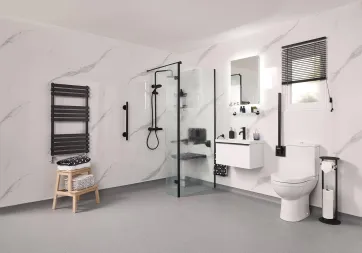
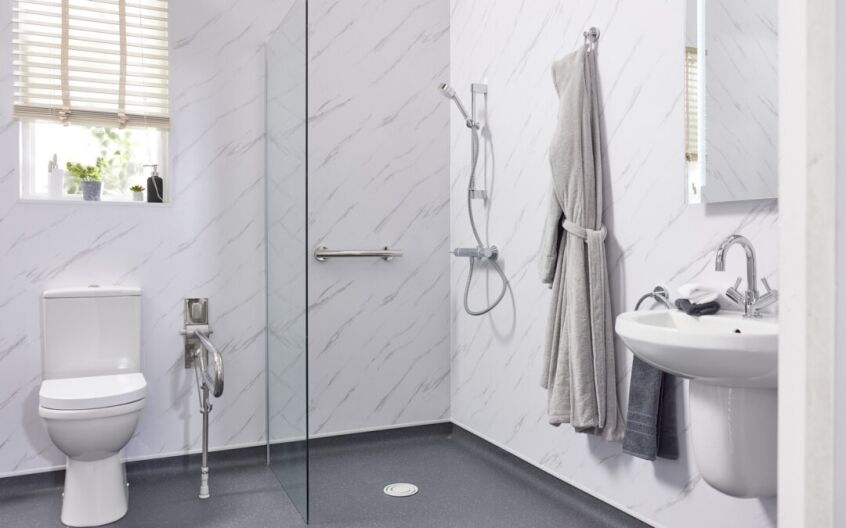
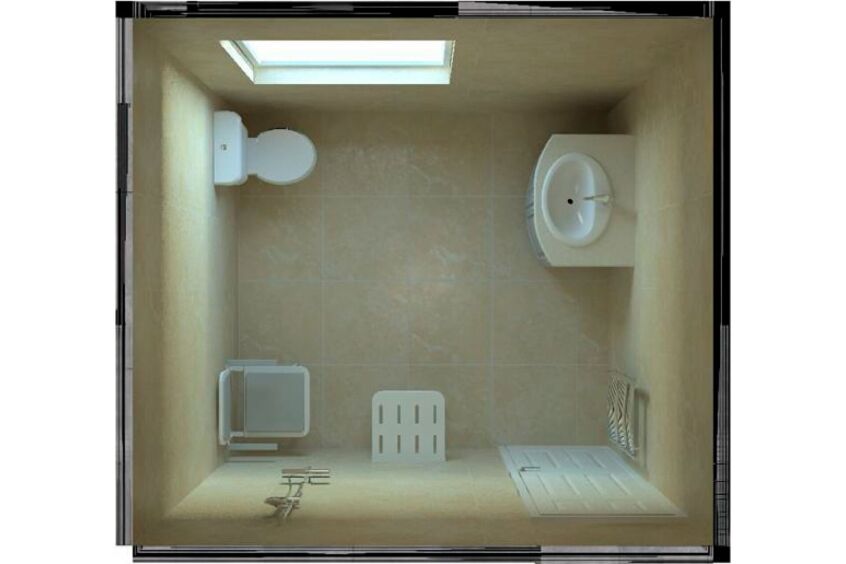
In a very small room, don’t try to divide it into a wet half and a dry half. Tank the entire floor and the lower walls, lay one continuous slip-resistant floor with a gentle fall to the drain, and let the room work as a single space. It is the only layout that fits a shower, toilet and basin into 1.2m x 1.2m.
2. A sliding pocket door
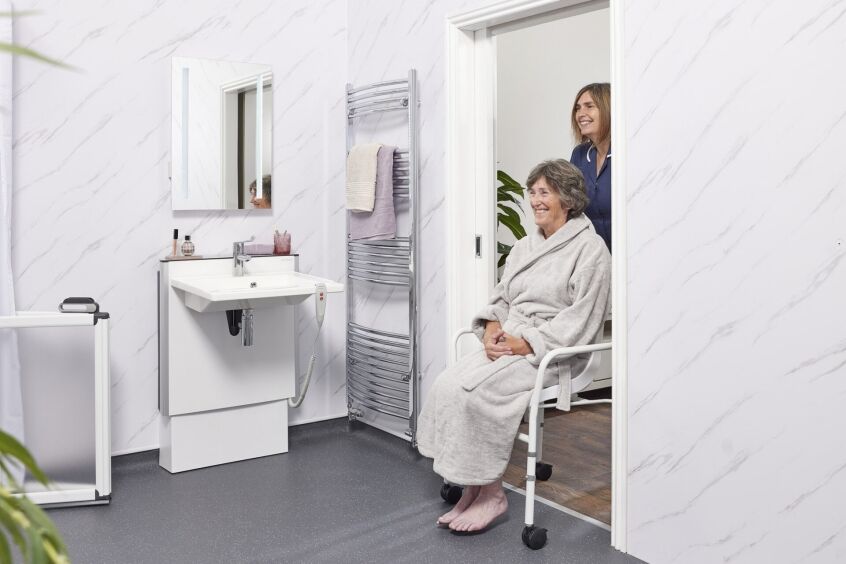
A hinged door swinging into the room takes close to a square metre out of use. A pocket door slides into the wall cavity and gives all of that back, so the door stops being the reason a wheelchair can’t turn. It also removes the door as a slip hazard for someone steadying themselves on the frame.
3. Wall-hung toilet and basin
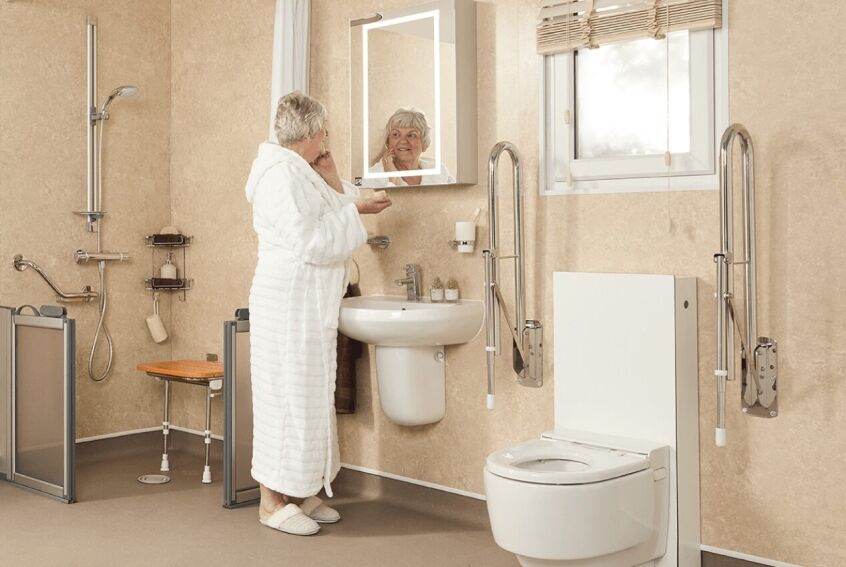
Lifting the sanitaryware off the floor does three jobs in a small wet room: it creates knee space for a seated user at the basin, it keeps the whole floor visible so the room reads as larger, and it makes the floor easier to squeegee and mop after every shower. See our wet room cleaning guide for the routine.
4. A fold-down seat instead of a shower chair
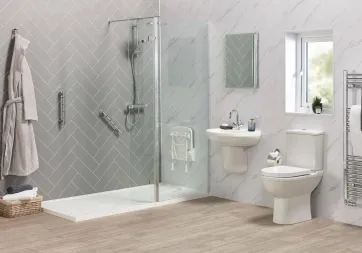
A freestanding plastic shower chair lives in the middle of the room and never moves. A wall-mounted fold-down seat, fitted at a height measured for the person using it, disappears against the wall when nobody is showering. Slatted timber versions look like a spa fitting rather than equipment.
5. A single fixed glass screen
Shower curtains cut a small room in half and cling to you. One fixed panel of clear glass, positioned to shield the toilet from spray, keeps the view to the back wall open and keeps the rest of the room drier. In rooms under 1.5m wide we often use a half-height screen so a carer can help from the dry side.
6. One floor, wall to wall
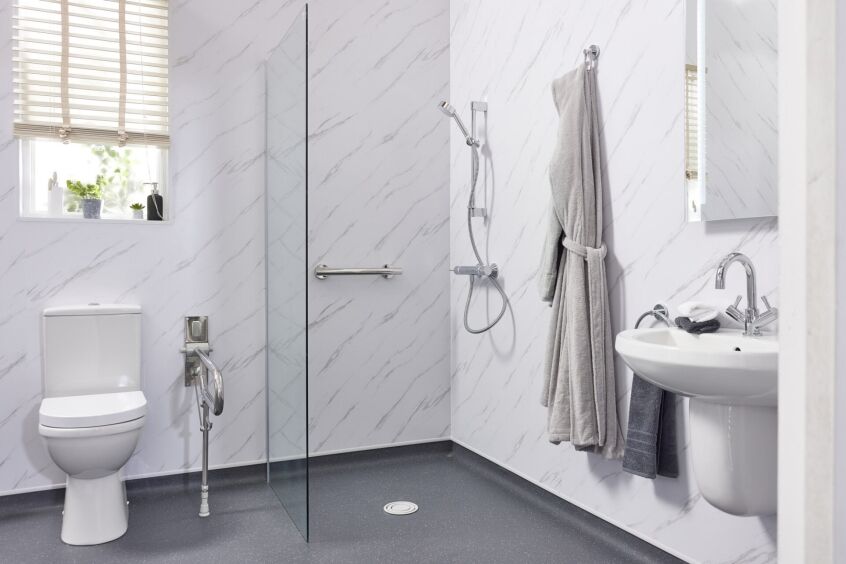
Changing the flooring at the shower edge draws a line across the room and makes it feel smaller. Run the same slip-resistant safety vinyl from the door threshold into the drain. Wood-effect and stone-effect finishes are available with the same slip rating as plain colours. Our wet room flooring guide explains the ratings.
7. Underfloor heating instead of a radiator
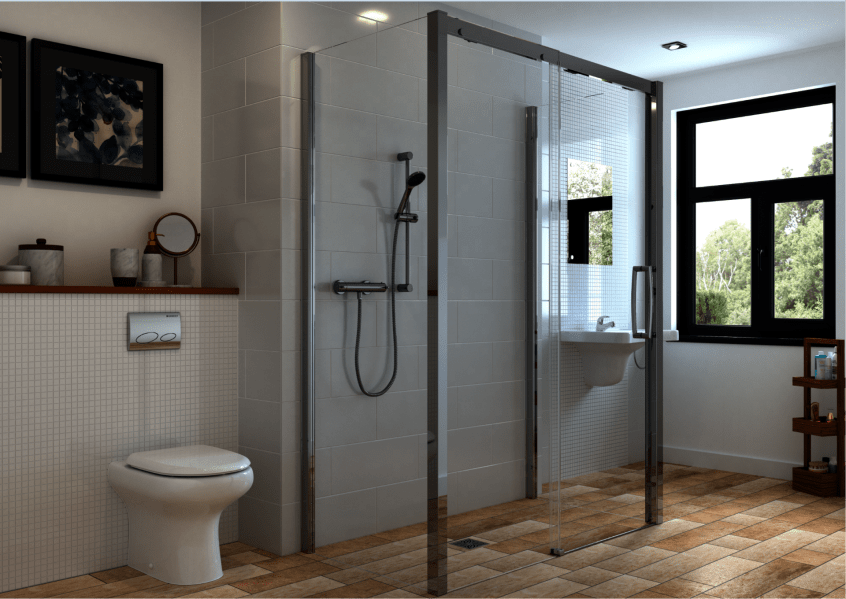
A radiator takes a whole wall that a small wet room needs for grab rails and a seat. Electric underfloor heating under the safety vinyl frees that wall and dries the floor quickly after each shower, which reduces the slip risk. Where a towel rail is still wanted, a tall, narrow one behind the door keeps it out of the way.
8. Short-projection or corner toilet
A standard toilet projects 650mm to 700mm from the wall. A short-projection pan stops at around 600mm, and in a narrow room that 100mm is often the difference between a walking frame getting past or not. In square rooms, a corner-mounted toilet opens up the centre of the floor for turning.
9. Recessed storage
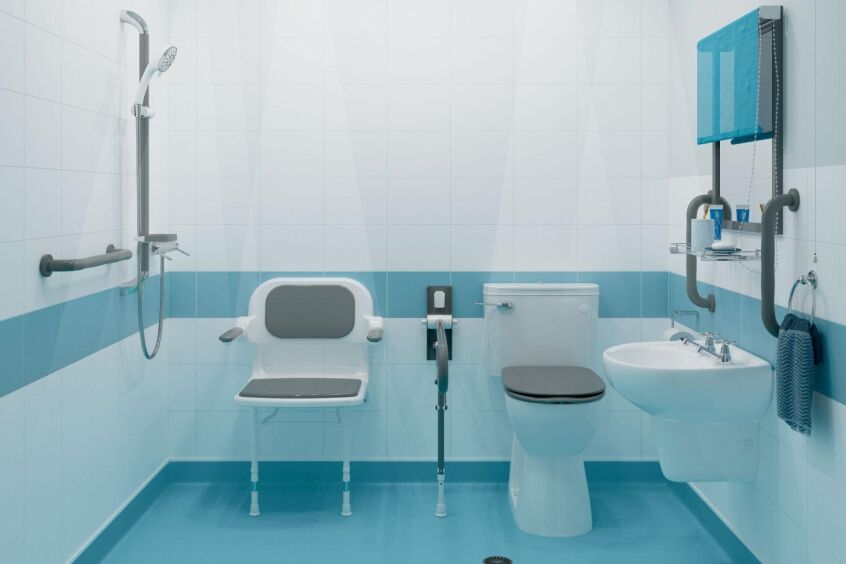
Cabinets and wire caddies protrude into the room and are what people catch themselves on when they slip. Tiled niches built into the stud wall between the studs hold everything at reach height without taking any floor or elbow room. A recessed mirror cabinet above the basin does the same job for medicines.
10. Grab rails that earn their place
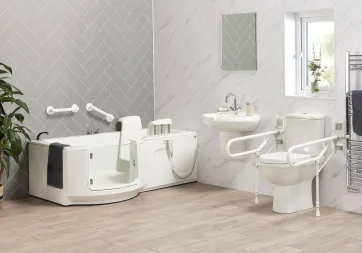
In a small wet room every rail has to be somewhere useful: one at the shower entry, one on the shower wall beside the seat, and a drop-down rail beside the toilet if there is no wall to fix to. Contrasting colours make them easier to see for anyone with reduced vision. Our grab rail positioning guide has the heights we work to.
11. Light, large and well lit
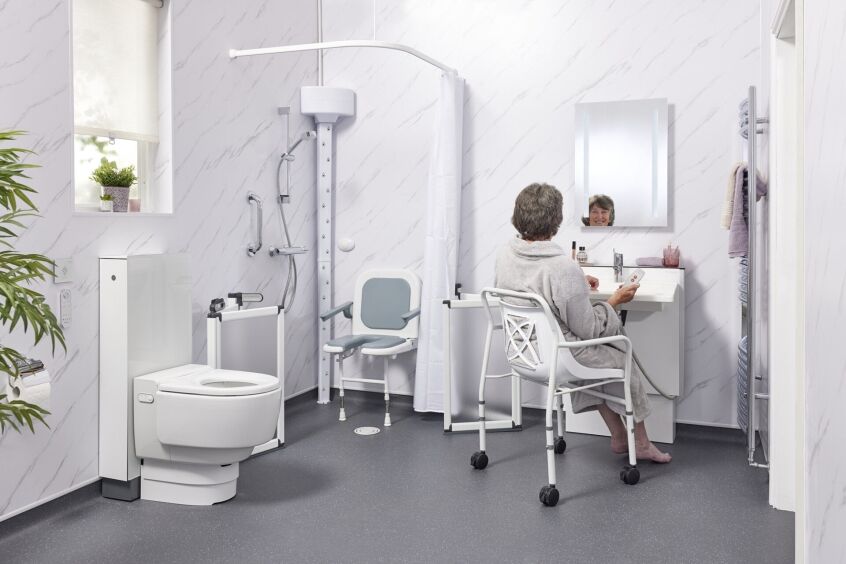
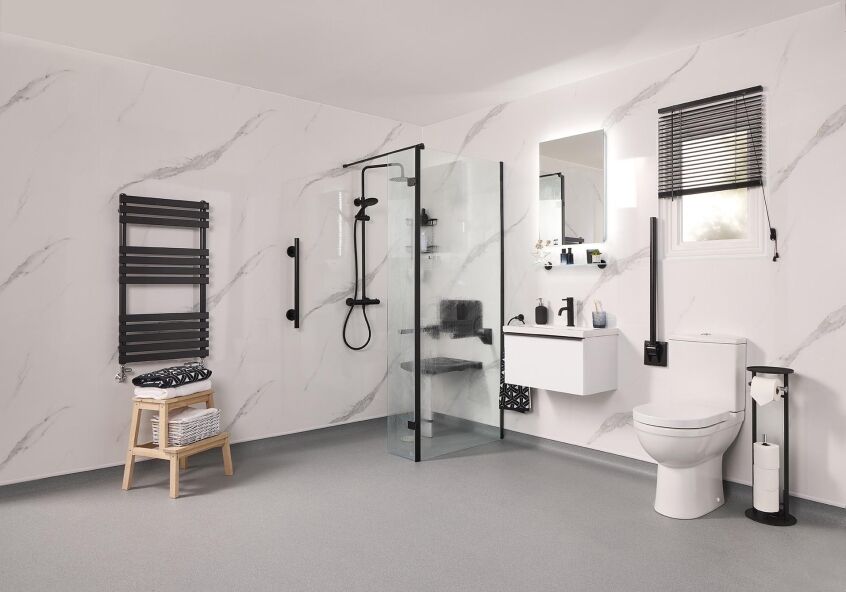
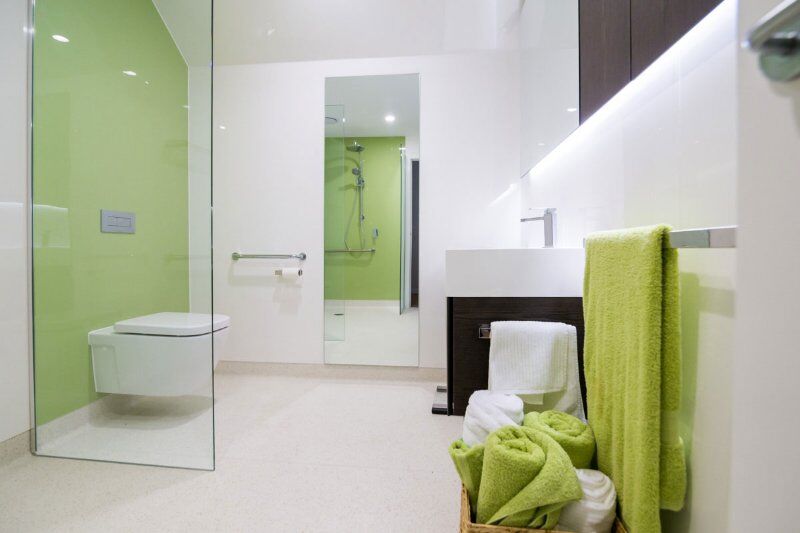
Pale walls and large-format tiles with fewer grout lines make a boxed-in room feel wider, and matter most in an internal bathroom with no window. Bright, warm-white LED downlights, with one centred over the shower area, remove the shadows that make small rooms feel like cupboards.
12. Extraction that actually clears the steam
A small wet room fills with steam in seconds, and steam that hangs around becomes water on the floor and mould on the ceiling. An inline extractor fan in the ceiling void, wired to the light with a timed overrun, clears it before it settles. A window on its own is not enough in a room this size.
Planning a walk-in shower or wet room?
Our surveyors design and fit accessible bathrooms across the UK. Book a free home visit: we plan the layout with you, check whether you qualify for 0% VAT, and give you a fixed-price quote with no obligation.
 Book a Free Design Visit
Which? Trusted Trader · Free home visits across the UK · Lifetime installation guarantee · 0% VAT if you qualify
Converting a downstairs toilet into a wet room
The most common small wet room we build is a downstairs cloakroom or under-stairs WC turned into a full shower room, so that someone no longer has to climb the stairs to wash. It is nearly always possible, with three technical points our surveyors check first.
- Drainage. Ground-floor rooms often have no fall to the drain, so we fit a pump-assisted waste rather than relying on gravity.
- Ventilation. These rooms rarely have a window, so a powerful inline extractor is essential, not optional.
- Heating and walls. The radiator usually goes, replaced by underfloor heating, and the walls are tanked before the finish goes on because there is no dry zone to speak of.
If the ground floor isn’t an option, our guide to wet rooms upstairs covers what changes on a timber first floor.
What a small wet room costs
A smaller room does not always mean a smaller bill. You save on tiles and flooring, but the technical work that makes a tiny wet room succeed, such as tanking the whole room, a pump, a widened doorway or a pocket door, is the same or more than in a larger bathroom. Our wet room cost guide gives current UK ranges. If the wet room is being installed because of a long-term condition or disability, the work is likely to qualify for 0% VAT; our VAT relief guide explains the rules.
Frequently asked questions
What is the minimum size for a wet room in the UK?
We have installed fully working wet rooms in rooms of 1.2m x 1.2m, typically converted downstairs toilets, by treating the whole room as the shower. For a shower chair or assisted showering, 1.5m x 1.5m is the comfortable minimum, and a 1500mm turning circle is needed for independent wheelchair use.
Can a very small bathroom be a wet room without water going everywhere?
Yes. The whole floor and the lower walls are waterproofed, the floor is laid with a fall towards the drain, and a fixed screen shields the toilet and basin. A good extractor removes the steam. Water on the floor dries within minutes, especially with underfloor heating.
Is a small wet room better than a walk-in shower?
For wheelchair users, shower chairs and anyone who is helped to wash, a level wet room floor is the safer option because there is nothing to step over. If everyone using the room can manage a low step, a tray-based walk-in shower keeps more of the floor dry, and usually costs less; see our walk-in shower cost guide. Our wet room pros and cons guide compares the two in more detail.
Can I turn a downstairs toilet into a wet room?
In most homes, yes. The usual requirements are a pumped waste where there is no fall to the drain, an inline extractor because there is no window, and often a wider door. Our surveyors check all three on the home visit before quoting.
Do I need planning permission for a small wet room?
Not for converting an existing room inside the house. Building regulations still apply to the drainage, electrics and ventilation, and we handle that as part of the installation. A small extension to gain space is a separate matter, usually under permitted development, which we can advise on during the survey.
Can I combine a separate toilet and bathroom into one wet room?
Yes, and it is often the best way to gain a proper turning circle in an older house with a separate WC. The dividing wall comes out, one doorway is blocked up, and the result is a single accessible shower room. It is more building work, but it usually solves the space problem completely.
Don’t let the size stop you
Some of the best wet rooms we have built were in the smallest rooms. It starts with a tape measure and someone who has done it before. Our small wet rooms page shows more of what is possible, and a free home assessment will tell you exactly what fits in yours.

Michael
Clients’ Needs Assessor at EA Mobility
With over 20 years of experience in the mobility sector, he has helped change the lives of thousands of people, helping them regain independence through essential property adaptations.
Free · No obligation · UK-wide
Ready for a safer, easier bathroom?
Tell us a little about your bathroom and one of our own surveyors will visit at a time that suits you, anywhere in the UK. You'll get honest advice and a fixed-price quote to consider in your own time.
- Rated 4.9 by Which? Trusted Traders
- Our own installers, never subcontracted
- 0% VAT on eligible installations
- Lifetime installation guarantee
Prefer to talk? Call free on 0800 955 8810