

Last Updated on September 24, 2026
Constipation is more than an annoyance. It is uncomfortable, stressful, and can leave you feeling sluggish and heavy. If you have tried increasing your fibre intake and drinking more water but still feel blocked, you might be looking for immediate, gentle relief.
You may have heard that a warm bath can help. But is this just an old wives’ tale, or is there science behind it?
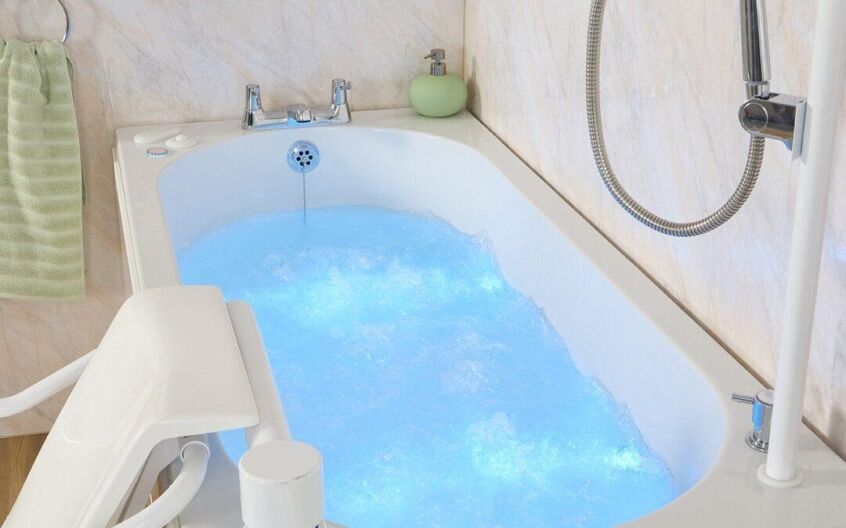
Yes, a warm bath can help ease constipation. Soaking in warm water (around 37°C to 39°C) for 15 to 20 minutes relaxes your tummy muscles and helps your bowel settle back into its natural rhythm. It works best alongside a gentle clockwise tummy massage and plenty of water. A bath is a comfort measure rather than a cure, so if constipation keeps coming back, speak to your pharmacist or GP.
In this guide, we will explore the science of how heat affects your digestion, a step-by-step “Bathing Ritual” to encourage bowel movements, and, most importantly, how to bathe safely when you are feeling unwell or unsteady.
Medical Disclaimer
The content in this article is for informational purposes only and is not intended to replace professional medical advice, diagnosis, or treatment. Constipation can sometimes be a symptom of underlying health issues. Always consult your GP or a medical professional if you have severe pain, blood in your poo, or constipation that does not improve with home treatment.
The Science: Why Heat Helps Your Gut
To understand why a bath helps, we need to look at how your body digests food. Your intestines move waste through a process called peristalsis: a series of wave-like muscle contractions. When you are constipated, these contractions often slow down or become irregular.
Here is how warm water therapy targets that problem:
1. Relaxing the Gut-Brain Axis
There is a direct communication line between your brain and your gut, often called the “gut-brain axis.” Have you ever had a “nervous tummy”? That is this axis at work. Stress releases cortisol, which can cause your digestive muscles to tense up and stop moving.
Submerging in warm water triggers the parasympathetic nervous system (your “rest and digest” mode). As your mind relaxes, your abdominal muscles loosen, allowing your bowel to return to its natural rhythm.
2. Increasing Blood Flow
Heat causes vasodilation, the widening of blood vessels. When you soak in a warm bath, blood flow improves throughout your body, including to your digestive tract.This increased circulation can help stimulate sluggish organs and encourage the muscles of the colon to contract more effectively.
3. Relieving Pain and Cramping
Constipation often comes with painful gas and cramping. Warmth acts as a natural antispasmodic. Just as a hot water bottle soothes a sore back, the enveloping heat of a bath soothes the smooth muscles of the intestines, reducing pain and making it easier to pass a stool.
Finding the bath harder to get in and out of?
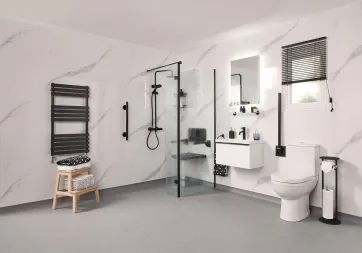
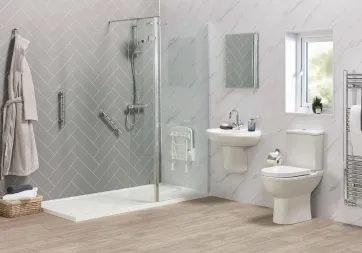
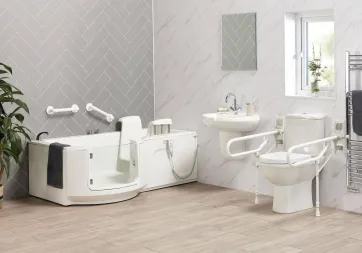
A walk-in bath or low-level bath gives you back a safe, comfortable soak. Book a free home visit: we measure the room, check whether you qualify for 0% VAT, and leave you a fixed-price quote to think about in your own time.
 Book a Free Home Visit
Which? Trusted Trader · Free home visits across the UK · Lifetime installation guarantee · 0% VAT if you qualify
The Constipation Relief Ritual: A Step-by-Step Guide
Simply sitting in water might not be enough. To get things moving, we recommend a 4-step ritual that combines heat, hydration, and massage.
Step 1: Preparation & Hydration
Do not skip this step. Hot baths can lead to sweating, which dehydrates you. Dehydration is one of the leading causes of constipation because the colon pulls water from your stool to hydrate the rest of the body, leaving the stool hard and difficult to pass.
Drink Warm Lemon Water: 15 minutes before your bath, drink a large glass of warm water with a slice of lemon. Warm drinks can help get your bowel moving, and drinking before you soak helps you stay hydrated.
Gather Supplies: Have a soft towel, a robe, and a glass of cool water within arm’s reach of the tub.
Step 2: The Ideal Water Temperature
You want the water to be therapeutic, not stressful.
- Target Temperature: Aim for 37°C to 39°C (98°F–102°F).
- Why? If the water is too hot (over 40°C), it can cause dizziness or a drop in blood pressure. Since constipation can already make you feel faint (vasovagal response), avoiding extreme heat is crucial for safety.
What about Epsom Salts?
Many people swear by adding 1–2 cups of Epsom salts (magnesium sulfate) to the bath.
- The Theory: Magnesium is a natural muscle relaxant and laxative. The theory is that magnesium ions absorb through the skin to relax the bowel.
- The Science: While scientific studies on “transdermal absorption” (absorbing through skin) are still debated, many users report feeling significantly more relaxed after an Epsom soak. Unless you have kidney issues or sensitive skin, it is a safe and soothing addition to try.
Step 3: The “I-L-U” Abdominal Massage
This is the most critical part of the routine. While you are submerged in the warm water, performing a self-massage can mechanically stimulate the colon.
The “I-L-U” Technique:
This massage follows the path of your large intestine (colon).
- Lie Back: Recline comfortably in the bath so your stomach is submerged.
- The “I”: Use your fingers to stroke down the left side of your belly (from ribs to hip). This pushes waste in the descending colon toward the exit. Do this 10 times.
- The “L”: Stroke across your belly from right to left (under your ribs), then down the left side. This moves waste across the transverse colon. Do this 10 times.
- The “U”: Stroke up the right side (from hip to ribs), across to the left, and down the left side. This traces your entire colon. Do this 10 times.
- Clockwise Motion: Finish by gently massaging your belly button area in a clockwise circle for 2 minutes. Always go clockwise, as this is the direction of digestion. Rubbing anti clockwise can fight against your body’s natural flow.
Step 4: The Post-Bath Routine
Don’t rush out.
- Dry off slowly and keep warm.
- Drink another glass of water.
- Try to go to the toilet if you feel the urge, but do not strain. Use a small footstool (or “squatty potty”) to raise your knees above your hips, which straightens the rectum and makes passing stool easier.
Safety First: Bathing When You Feel Unwell
This section is vital for older adults or those with limited mobility.
Constipation doesn’t just affect your stomach; it can make you feel dizzy, nauseous, and weak. Combining these symptoms with a slippery bathtub creates a high risk of falls.
If you struggle with mobility, getting in and out of a standard low-level bathtub while constipated can be dangerous.
How to Bathe Safely
- Don’t Lock the Door: If you are feeling unwell, let someone in the house know you are taking a bath, and leave the door unlocked in case you need help.
- Use Grab Rails: Never pull yourself up using the taps or a towel radiator. These aren’t designed to hold your weight. Install proper grab rails at the entry point and on the wall beside the bath to stabilise yourself. Read more about Where to Put Grab Rails in a Shower and Which Ones to Choose.
- Watch for “Bathroom Blackouts”: Straining on the toilet or standing up too quickly from a hot bath can trigger the vagus nerve, causing a sudden drop in blood pressure (fainting). Stand up slowly. Count to five before stepping out.
- Consider a Walk-In Bath: If you find that you are avoiding baths because you are afraid of getting stuck or falling, a walk-in bath might be the solution.
- Benefit: You can walk in through a low-level door and sit on a comfortable, integrated seat.
- Relief: The upright seating position is actually better for digestion than lying flat, and it allows you to massage your stomach without straining your neck or back. Plus, you can soak safely without the fear of trying to lift your legs over a high rim when you feel weak.
Complementary Habits for Long-Term Relief
A bath provides immediate symptom relief, but to stop constipation from coming back, you need to support your gut health daily.
- Fibre is King: Whole grains, oats, fruits (especially kiwis and prunes), and vegetables add bulk to your stool.
- Move Your Body: A daily 20-minute walk stimulates the metabolism. If you have limited mobility, chair yoga or gentle seated twists can also massage the internal organs.
- Check Your Meds: Some painkillers (like codeine) and iron supplements are notorious for causing constipation. Speak to your pharmacist if you suspect your medication is the cause.
When to See a Doctor
While occasional constipation is normal, it can sometimes signal a more serious issue. Please speak to your GP if:
- Your constipation is not getting better with home treatment, or it keeps coming back.
- You see blood in your poo or on the toilet paper.
- You are losing weight without trying, or you feel very tired all the time.
- You notice a lasting change in your usual bowel habits.
- You think a medicine you take might be causing it.
Get urgent advice from NHS 111 if you have severe tummy pain, your tummy is swollen, or you are being sick. The NHS constipation guide has more detail.
Frequently Asked Questions
Q: Is it safe to take a bath if I have high blood pressure?
A: Warm water can temporarily lower blood pressure, which might make you dizzy if you are on medication. Keep the water “warm” rather than “hot” (around 37°C) and don’t stay in for more than 15-20 minutes. Always stand up slowly.
Q: Does soaking in a bath actually help with constipation?
A: Soaking in a warm bath helps relieve constipation in three ways: it activates your parasympathetic (“rest and digest”) nervous system, which relaxes tense abdominal muscles; it increases blood flow to the digestive tract through vasodilation; and it soothes the cramping caused by trapped gas. It works best when combined with an abdominal massage while in the water.
Q: Is a hot bath better than a warm bath for constipation relief?
A: A warm bath (37°C–39°C / 98°F–102°F) is more effective and safer than a very hot one. Water above 40°C can cause dizziness and a sudden drop in blood pressure. That is a real risk when constipation already makes you feel faint. “Hot” enough to relax your muscles is the goal; scalding hot is counterproductive.
Q: How does a warm bath specifically help with constipation?
A: Warm water (37°C–39°C) gently heats your abdominal area, triggering vasodilation, which widens blood vessels and boosts circulation to your colon. This encourages sluggish bowel muscles to contract more regularly (a process called peristalsis). It also lowers stress hormones like cortisol, which are a common cause of digestive muscle tension in the first place.
Q: Can a bath actually make you need to poop?
A: Yes, for some people. Warm water stimulates the gastrocolic reflex: the signal your body sends from the stomach to the colon to “make room.” Combined with an abdominal massage using the I-L-U technique (tracing the shape of your colon), a 20-minute soak can prompt the urge to have a bowel movement shortly after you get out.
Q: Can a shower help with constipation if you don’t have a bath?
A: Yes, a warm shower is a practical alternative. Direct the showerhead onto your abdomen for 5–10 minutes, letting the heat penetrate the muscles. While standing or sitting on a shower stool, perform a clockwise stomach massage. It is less immersive than a bath, so the relaxation effect is slightly reduced, but it can still provide meaningful relief.
Q: Does it matter how you sit or soak, or does simply getting in help?
A: Simply getting in provides partial relief through heat and relaxation. However, actively performing a clockwise abdominal massage while soaking significantly increases the benefit. The massage mechanically stimulates your colon in the direction of digestion. Sitting upright (as in a walk-in bath) can also be more effective than lying flat, as it assists gravity.
Q: Are warm baths and warm showers both effective, or is one significantly better?
A: Baths generally outperform showers for constipation because full immersion surrounds the abdomen in sustained warmth, producing a stronger relaxation response. A shower’s moving water cools faster and covers a smaller area at once. That said, a warm shower with targeted abdominal massage still offers meaningful relief, particularly for people who cannot safely access a standard bathtub.
Q: Does adding Epsom salts to a warm bath improve constipation relief?
A: Many people find Epsom salt baths (1–2 cups of magnesium sulphate) more effective than plain water soaks. Magnesium is a natural muscle relaxant and is used orally as a laxative. While the evidence for transdermal (through-skin) absorption is still debated, the additional relaxation effect is well-reported and Epsom salts are safe for most people unless you have kidney problems or sensitive skin.
Q: How long should you stay in a warm bath to relieve constipation?
A: Aim for 15–20 minutes. This is long enough to let the heat penetrate the abdominal muscles and trigger the nervous system response, but short enough to avoid dehydration or a significant drop in blood pressure. Do not exceed 20 minutes, especially in hotter water. Perform the I-L-U abdominal massage during the final 5–10 minutes for the best results.
Q: Is it safe to have a hot bath when you feel unwell from constipation?
A: Extra caution is needed. Constipation can make you feel dizzy, nauseous, and weak. Combined with a hot bath’s blood-pressure-lowering effect, there is a real risk of fainting, especially when standing up quickly from the water. Always leave the bathroom door unlocked, use grab rails to exit, stand up slowly, and avoid water above 39°C. If you are on blood pressure medication, consult your GP first.
Q: Could a cold bath or cold shower help constipation instead?
A: Cold water is generally not recommended for constipation. It causes abdominal muscles to tense and contract, which is the opposite of what constipation relief requires. Some people use alternating hot-cold hydrotherapy to boost overall circulation, but for constipation specifically, sustained warmth is the proven approach. Stick to warm water at 37°C–39°C.
Q: When should you stop trying home remedies and see a doctor for constipation?
A: See your GP if your constipation is not improving with home treatment or keeps coming back, if there is blood in your poo, if you are losing weight without trying or feel very tired all the time, or if your bowel habits have changed. Get urgent advice from NHS 111 if you have severe tummy pain or swelling. A warm bath is helpful for occasional constipation, but it is not a substitute for medical advice when symptoms are persistent or serious.
Conclusion
A warm bath is a safe, natural, and effective way to help relieve the discomfort of constipation. By combining the heat with proper hydration and the “I-L-U” massage technique, you can encourage your body to get back to regular movement.
However, your safety in the bathroom is the priority. If you are finding it difficult to use your standard tub, or if you feel unsafe bathing while unwell, it might be time to look at safer bathing options.
Struggling to get in and out of the bath safely?
Browse our range of Walk-In Baths and Easy-Access Showers designed to give you back your independence and peace of mind.
Contact Us Today for a free brochure or friendly advice on making your bathroom safer.

Michael
Clients’ Needs Assessor at EA Mobility
With over 20 years of experience in the mobility sector, he has helped change the lives of thousands of people, helping them regain independence through essential property adaptations.
Free · No obligation · UK-wide
Ready for a safer, easier bathroom?
Tell us a little about your bathroom and one of our own surveyors will visit at a time that suits you, anywhere in the UK. You'll get honest advice and a fixed-price quote to consider in your own time.
- Rated 4.9 by Which? Trusted Traders
- Our own installers, never subcontracted
- 0% VAT on eligible installations
- Lifetime installation guarantee
Prefer to talk? Call free on 0800 955 8810