

Last Updated on September 24, 2026
Choosing between a walk-in bath vs a walk-in shower is one of the biggest decisions when adapting a bathroom for safer, more independent bathing. Both remove the dangerous step over a standard bath, both can be fitted with grab rails and seating, and both can be installed VAT-free if you qualify. The right choice comes down to how you bathe, how much your mobility is likely to change, the space you have, and whether a carer is involved.
In short: a walk-in shower is usually the better choice for wheelchair users, anyone with significantly reduced mobility, and households where a carer assists, because it offers fast, level-access, step-free washing. A walk-in bath suits people who can still manage a low step and want to keep the comfort and therapeutic relief of a warm soak. This guide breaks down the differences in detail so you can decide with confidence.
Walk-In Bath vs Walk-In Shower: Quick Comparison
| Feature | Walk-In Bath | Walk-In Shower |
|---|---|---|
| Access | Low step over a sealed door threshold | Level or near-level, step-free entry |
| Best for | Those who love a soak and can sit and stand with some support | Wheelchair users, very limited mobility, carer-assisted bathing |
| Speed of use | Slower: you wait for the bath to fill and drain while seated | Fast: wash and go, ideal for daily routines |
| Therapeutic benefit | High: warm water can ease aching joints and muscles | Lower: practical washing rather than relaxation |
| Space needed | Often fits the existing bath footprint | Flexible: works well in small and large bathrooms |
| Future-proofing | Good, but bathing may become harder if mobility declines | Excellent: adapts easily to increasing care needs |
| VAT relief | 0% VAT if eligible | 0% VAT if eligible |
What Is a Walk-In Bath?
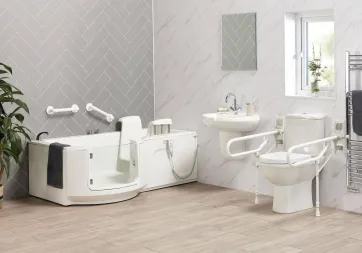
A walk-in bath is a specially designed bath with a watertight, side-opening door, so you step in over a low threshold rather than climbing over a high bath wall. Once inside, you sit on a built-in seat while the bath fills around you, then drain it before stepping out. Many models include powered seats, anti-slip floors, thermostatic anti-scald controls and grab rails as standard.
Walk-in baths come in several styles to suit different needs and bathroom sizes, including compact baths for smaller spaces and baths with seats for added comfort and support. They are ideal for anyone who finds traditional bathing difficult but still wants to enjoy a proper soak.
Planning a walk-in shower or wet room?
Our surveyors design and fit accessible bathrooms across the UK. Book a free home visit: we plan the layout with you, check whether you qualify for 0% VAT, and give you a fixed-price quote with no obligation.
 Book a Free Design Visit
Which? Trusted Trader · Free home visits across the UK · Lifetime installation guarantee · 0% VAT if you qualify
What Is a Walk-In Shower?
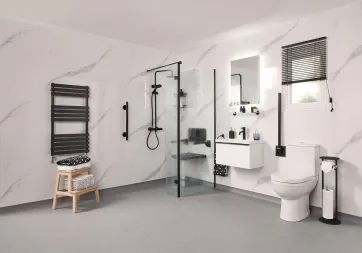
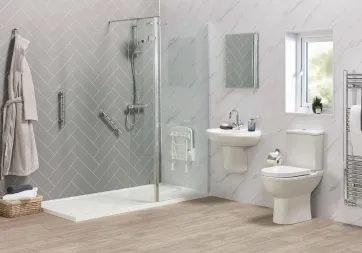
A walk-in shower replaces your bath with a safe, easy-access showering area featuring an ultra-low or completely level entry, slip-resistant flooring, grab rails and a fold-down seat. There is no tub to climb into and no waiting for water to fill or drain. You simply walk (or wheel) straight in.
For those with the greatest mobility needs, level access showers and wheelchair accessible showers remove barriers entirely, making them one of the safest and most practical long-term solutions for independent or assisted bathing.
Walk-In Bath: Pros and Cons
Advantages
- Lets you keep the comfort and relaxation of a full soak.
- Warm water can provide real therapeutic relief for aching joints, arthritis and stiff muscles.
- Built-in seating, grab rails and anti-slip surfaces make bathing far safer than a standard tub.
- Often fits within the footprint of your existing bath, minimising disruption.
Things to consider
- You sit in the bath while it fills and drains, which means a short wait in the water before and after bathing.
- It still requires the ability to step over a low threshold and to sit down and stand up, even with support.
- Generally uses more water and takes longer than a quick shower.
Walk-In Shower: Pros and Cons
Advantages
- Step-free, level access makes it the safest option for those with very limited mobility.
- Quick and easy for everyday washing, with no waiting for water to fill or drain.
- Far easier for a carer to assist, and suitable for wheelchair users.
- Excellent for future-proofing, as it adapts well if care needs increase over time.
Things to consider
- You lose the option of a deep, relaxing soak.
- Some people simply prefer bathing to showering for comfort or routine.
How to Choose Between a Walk-In Bath and a Walk-In Shower
There is no single right answer. The best choice depends on your personal circumstances. These are the key factors to weigh up.
1. Your current and future mobility
If you can still manage a low step and sit and stand with some support, a walk-in bath remains a comfortable option. If your mobility is significantly reduced, or likely to decline, a walk-in shower offers safer, longer-lasting accessibility.
2. Whether a wheelchair or carer is involved
For wheelchair users and anyone who needs hands-on help, a level-access walk-in shower is almost always the more practical solution. It gives a carer room to assist safely and removes the challenge of getting in and out of a tub.
3. Therapeutic relief vs everyday practicality
If warm-water soaking genuinely helps with pain, stiffness or relaxation, a walk-in bath delivers a benefit a shower cannot. If your priority is fast, fuss-free daily washing, a walk-in shower wins on convenience.
4. The space you have
Both options can be tailored to your room. Walk-in baths often slot into the existing bath space, while walk-in showers are highly flexible and work especially well in compact bathrooms. If you want the most open, barrier-free layout of all, it is also worth considering a full wet room.
5. Cost and VAT savings
Pricing for both depends on the model, features and the work involved, so the most reliable figure is a fixed, no-obligation quote based on your actual bathroom. Importantly, if you or the intended user is chronically sick or disabled, your installation may qualify for 0% VAT, saving 20% on the total project cost.
Who Should Choose a Walk-In Bath?
A walk-in bath is usually the better fit if you:
- Love a relaxing soak and don’t want to give that up.
- Experience joint or muscle pain that warm water helps to ease.
- Can still step over a low threshold and sit and stand with some support.
- Want a safer bathing experience that fits within your existing bath space.
Who Should Choose a Walk-In Shower?
A walk-in shower is usually the better fit if you:
- Have significantly reduced mobility or use a wheelchair.
- Rely on a carer for help with bathing.
- Prefer quick, easy daily washing without waiting for a bath to fill.
- Want to future-proof your bathroom against changing needs.
Can You Have the Best of Both?
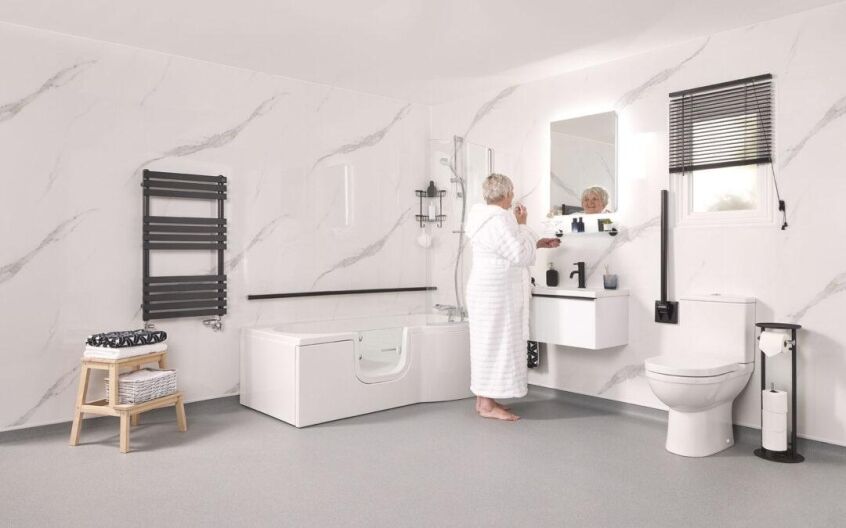
Yes. If you can’t decide between a walk-in bath vs a walk-in shower, there are options that combine both. Shower-over-bath and P-shaped walk-in bath designs let you soak when you want to and shower when you’re in a hurry. A level-access wet room can also include both a seated shower area and space for a separate bath. During a home visit, our designers can show you exactly how each option would look and work in your room.
How EA Mobility Helps You Decide
As a family-run business with over 20 years of experience and 7 years as an endorsed Which? Trusted Trader, we help you make the right choice without any pressure. Every installation is backed by our Lifetime Installation Guarantee, and our caring, DBS-checked assessors take the time to understand your needs rather than push a sale.
During your free, no-obligation home visit, we’ll assess your bathroom, discuss your mobility now and in the future, and use 3D CAD design to show you how a walk-in bath or walk-in shower would fit your space. You’ll then have a transparent, fixed quote to consider at your own pace. Not sure where to start? Our Bathroom Matchmaker can point you in the right direction in just a few questions.
Ready to talk it through? Call our friendly team free on 0800 955 8810.
Frequently Asked Questions
Is a walk-in bath or walk-in shower better for the elderly?
It depends on the individual. A walk-in shower is generally safer and easier for older people with reduced mobility or balance concerns, especially where a carer assists. A walk-in bath suits more active older adults who can manage a low step and want to keep the comfort of a warm soak.
Which is safer, a walk-in bath or a walk-in shower?
Both are far safer than a standard bath. A walk-in shower with level access is typically the safest overall because it removes the step entirely and allows step-free or wheelchair access, reducing the risk of slips and falls.
Can you have a shower in a walk-in bath?
Yes. Many walk-in baths can be fitted with an overhead or handheld shower, and P-shaped designs are made specifically to combine comfortable bathing with practical showering.
Are walk-in baths and walk-in showers VAT exempt?
If you or the intended user is chronically sick or disabled, both walk-in baths and walk-in showers can usually be supplied and installed at 0% VAT, saving 20% on the total cost. You can check your eligibility using our online VAT Exemption Checker, and we handle the paperwork for you.
Which is cheaper, a walk-in bath or a walk-in shower?
Costs vary widely depending on the model, features and installation work required, so prices overlap between the two. The most accurate way to compare is with a fixed, no-obligation quote based on your specific bathroom and needs.
How long does installation take?
Many walk-in bath and walk-in shower installations are completed within a few days, depending on the complexity of the work. We’ll give you a clear timeframe as part of your quote so you know exactly what to expect.

Kian Carvell
Sales & Marketing Director at EA Mobility
With a diverse background encompassing business development, marketing, and strategic partnership management, Kian plays a key role in his family-owned company’s growth.
Free · No obligation · UK-wide
Ready for a safer, easier bathroom?
Tell us a little about your bathroom and one of our own surveyors will visit at a time that suits you, anywhere in the UK. You'll get honest advice and a fixed-price quote to consider in your own time.
- Rated 4.9 by Which? Trusted Traders
- Our own installers, never subcontracted
- 0% VAT on eligible installations
- Lifetime installation guarantee
Prefer to talk? Call free on 0800 955 8810