

Last Updated on October 13, 2026
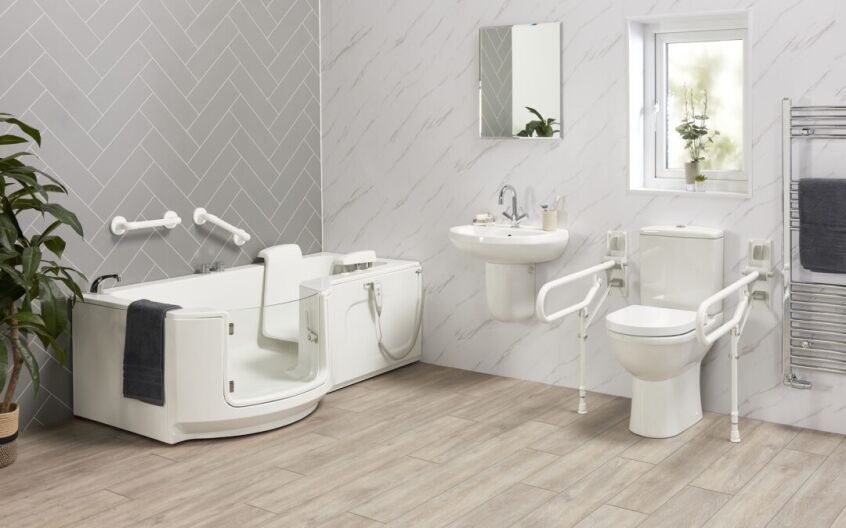
Most walk-in bath installations take two to four days: one day to remove the old bath and re-plumb, one or two to fit, level and finish the new one, and a final commissioning check before we leave. You keep the use of your toilet at the end of each day in almost every case, the old bath leaves with us, and the bathroom is protected from the front door onwards.
If you are weighing up a walk-in bath, the installation is usually the part people worry about most: mess, strangers in the house, being without a bathroom. This guide walks through exactly what happens, day by day, what can change the timeline, and why the fitting matters as much as the bath.
Installation at a glance
| Stage | When | What happens |
|---|---|---|
| Survey | Before anything is ordered | Floor type, water pressure, waste route, electrics, access widths; fixed-price quote |
| Protection and isolation | Day 1, first hour | Floor film and dust sheets from the door to the bathroom; water isolated to the bathroom only |
| Strip-out | Day 1 | Old bath, panels and fittings removed and taken away; floor and walls checked |
| Plumbing | Day 1 | Twin high-flow wastes, hot and cold feeds, thermostatic mixing valve |
| Fitting and levelling | Day 2 | Bath positioned on its steel sub-frame and levelled so the door seals; electrics for lifts or spa systems |
| Making good | Day 2 to 3 | Pipework boxed in, wall panels or tiling around the bath, sealing |
| Commissioning | Last day | Bath filled to test the door seal, drainage timed, water temperature set to a safe maximum, handover |
| First use | 24 hours after completion | Silicone fully cured |
Before installation day: the survey
Everything starts with a free home visit. Our surveyor measures the alcove, checks whether the floor is timber or concrete, tests water pressure and flow, traces the waste route to the soil stack, looks at the electrical supply if a powered lift or spa system is planned, and checks door and stair widths for getting the bath in and the old one out. That is what lets us give a fixed price and a realistic timeline rather than an estimate that changes once the old bath comes out. Our walk-in bath cost guide explains what moves the price.
Finding the bath harder to get in and out of?
A walk-in bath or low-level bath gives you back a safe, comfortable soak. Book a free home visit: we measure the room, check whether you qualify for 0% VAT, and leave you a fixed-price quote to think about in your own time.
 Book a Free Home Visit
Which? Trusted Trader · Free home visits across the UK · Lifetime installation guarantee · 0% VAT if you qualify
Day 1: protection, removal and plumbing
We treat your home as a home, not a building site. Adhesive floor film and dust sheets go down from the front door to the bathroom, and the team wears shoe covers indoors. The water is isolated to the bathroom only, so your kitchen taps and heating carry on as normal.
The old bath comes out carefully. A heavy cast-iron tub is cut into sections in the bathroom so it can be carried out without damaging door frames, and everything removed leaves the property with us. With the bath out we check the floor and the wall behind it, which is where years of unnoticed leaks show up.
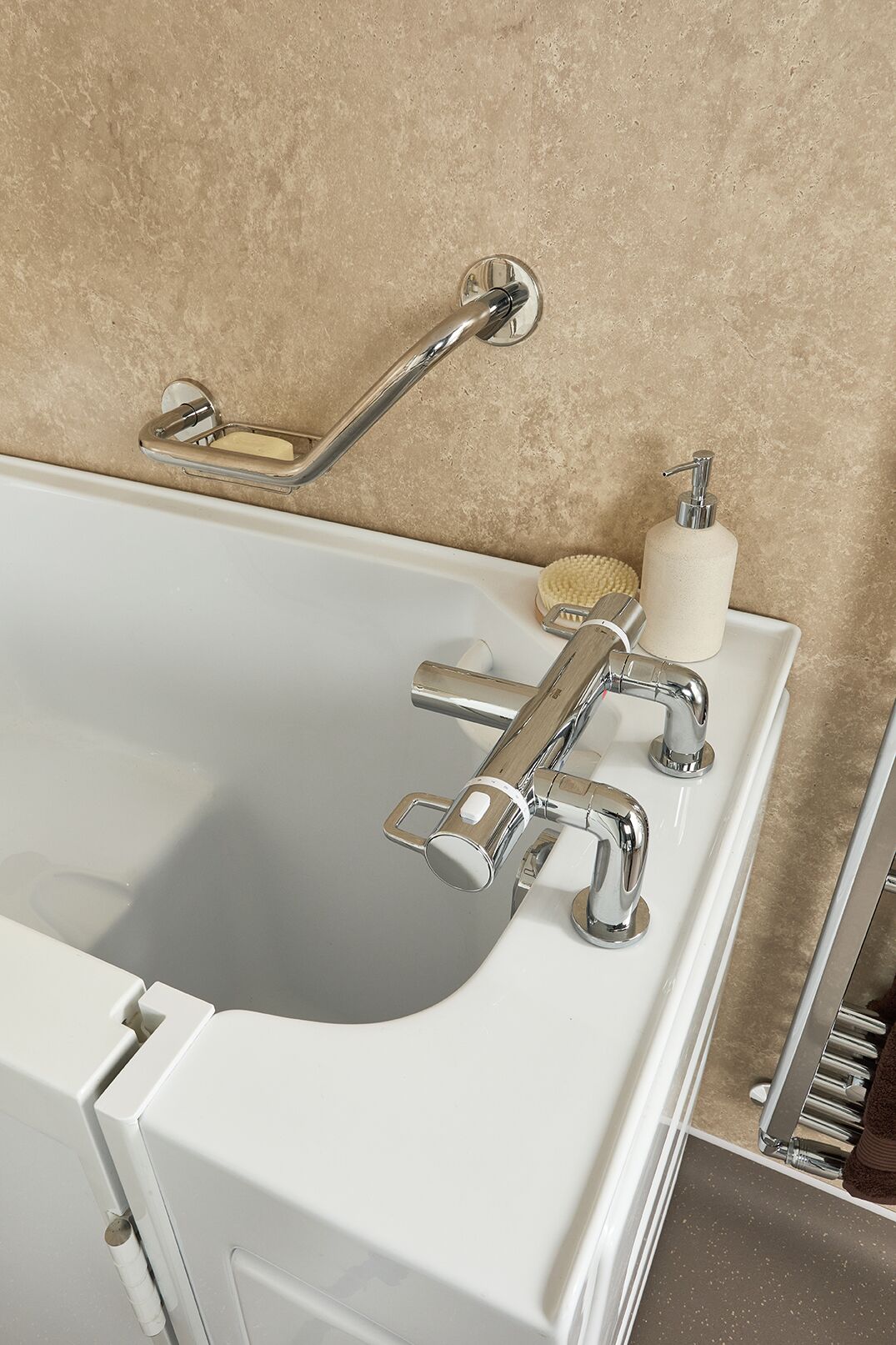
Then the plumbing. A standard bath has one waste; a walk-in bath needs two high-flow wastes so it drains quickly and you are not sitting in cooling water waiting to open the door. We fit a thermostatic mixing valve that blends the hot and cold before they reach the tap, so the water can’t scald even if the boiler surges. On a concrete floor or a long waste run, we may fit a pump so drainage stays fast.
Day 2 to 3: fitting, electrics and finishing
The new bath is positioned on its steel sub-frame and levelled to the millimetre. This is the step that decides whether the door seals for the next twenty years: a frame that is even slightly out lets the door warp under the weight of water and eventually leak. If you have chosen a bath with a powered lift or a spa system, our electrician connects it to a dedicated fused supply with RCD protection and certifies the work.
Then we make good. Pipework is boxed in, and the wall around the bath is finished. This is where the “tiling gap” comes in: when an old bath comes out, the wall tiles usually stop at its rim, and a walk-in bath is often a different height or shape, leaving bare wall. We solve it one of three ways: patch in matching tiles if you have spares; use extended end panels where the bath design allows; or, most often, fit waterproof wall panels over the tiles and the gap. Panels are fully waterproof, have no grout to clean, and give a clean finish without re-tiling the room.
Commissioning: the checks before we leave
We don’t leave until the bath has been tested as you will use it. We fill it to test the door seal under full water pressure, time the drainage, check every joint, and set the thermostatic valve to a safe maximum, usually 41°C, to protect older skin from scalding. We show you how the door, seat, controls and any lift work, and answer questions while we are still there. Every installation is covered by our lifetime installation guarantee.
What can change the timeline
- Rotten floorboards or damp under the old bath. We show you straight away and reinforce or replace the timber before the new bath goes in; it can add a day.
- Concrete floors and long waste runs. Extra drainage work or a pump adds time on day 1.
- Powered lifts and spa systems. Electrical work and certification add half a day to a day.
- Layout changes. Moving the toilet or basin, or re-tiling the whole room, turns a bath swap into a bathroom refit; our walk-in bath vs walk-in shower guide covers when that is worth it.
Why a specialist fitter rather than a plumber
A local plumber can fit a bath. Fitting a walk-in bath well is a different job. The door frame has to be levelled precisely or the seal fails. The twin wastes have to run to properly sized pipework, not be joined into one, or the bath takes fifteen minutes to drain. The thermostatic valve has to be calibrated as well as connected. And an online bath fitted by a third party usually leaves you with a parts-only warranty and nobody to call when it leaks. Our fitters do this every week, and the workmanship is guaranteed for life.
Frequently asked questions
How long does it take to install a walk-in bath?
Two to four days for a straight swap in the existing bath’s position. Powered-lift models, concrete floors with long waste runs, and jobs that change the room layout take longer; we confirm the timeline at the survey.
Will I be without a toilet?
Rarely. We plan the work so the toilet is usable at the end of each day. If your layout means it will be out of action for a period, we tell you before we start so you can make arrangements.
How much mess is there?
Floors are protected from the front door to the bathroom, dust sheets go down, the team wears shoe covers, and all rubble and the old bath leave with us. Cutting a cast-iron bath is the noisiest part and is done within the bathroom.
What happens to the gap in the tiles where the old bath was?
We patch with matching tiles, use extended end panels, or, most often, fit waterproof wall panels over the tiles and the gap for a clean, grout-free finish.
What if you find rotten floorboards?
Old baths often leak unnoticed for years. If the timber is damaged we show you immediately and reinforce or replace it before the new bath goes in. It may add a day.
How soon can I use the bath?
Twenty-four hours after completion, so the silicone sealant cures fully.
Do you test the door for leaks?
Yes. We fill the bath to full working depth before we leave, check the seal and every joint, and time the drainage.
Do I need an electrician for a walk-in bath?
Only for models with a powered lift, heated seat or spa system. Our electrician fits a dedicated protected supply and certifies it as part of the installation.
Ready for a safer bathroom?
Book a free, no-obligation home visit. Our surveyor checks your floor, water pressure and waste route, confirms whether you qualify for VAT relief, and gives you a fixed price and an honest timeline for your home.
Or call us free on 0800 955 8810.

Michael
Clients’ Needs Assessor at EA Mobility
With over 20 years of experience in the mobility sector, Michael has helped thousands of people regain independence through essential property adaptations.
Free · No obligation · UK-wide
Ready for a safer, easier bathroom?
Tell us a little about your bathroom and one of our own surveyors will visit at a time that suits you, anywhere in the UK. You'll get honest advice and a fixed-price quote to consider in your own time.
- Rated 4.9 by Which? Trusted Traders
- Our own installers, never subcontracted
- 0% VAT on eligible installations
- Lifetime installation guarantee
Prefer to talk? Call free on 0800 955 8810