

Last Updated on October 13, 2026
The average UK bathroom measures roughly 1.7m x 2.0m, and in many terraced houses and flats it is smaller still. When mobility is limited, that lack of space stops being an annoyance and becomes a safety problem: there is nowhere to turn a walking frame, no room for a carer to stand, and a bath that takes up the whole wall.
The good news is that a small bathroom is rarely the barrier people expect. In most of the homes we survey, a walk-in shower fits comfortably once the layout is planned around the room’s real dimensions rather than around the fittings that happen to be there now.
This guide covers the 25 layouts, fittings and finishing ideas our surveyors use most often in small UK bathrooms, with the measurements that make each one work and the situations where it doesn’t. If you’d rather talk it through in your own bathroom, you can book a free home assessment at any point.
The five layouts we recommend most in small bathrooms
| Layout | Best for | Typical tray size | Space saved |
|---|---|---|---|
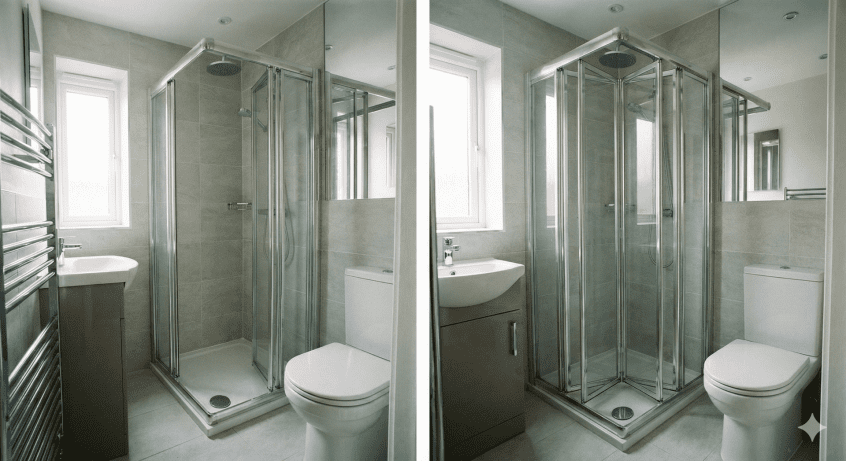
| Corner entry | Square rooms around 1.8m x 1.8m | 900mm x 900mm | Good |
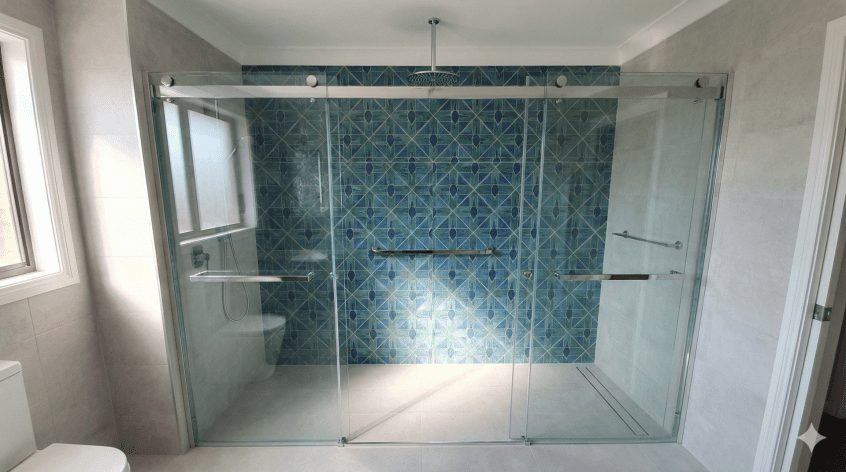
| Alcove swap | Replacing a bath without moving pipework | 1700mm x 700mm | Excellent |
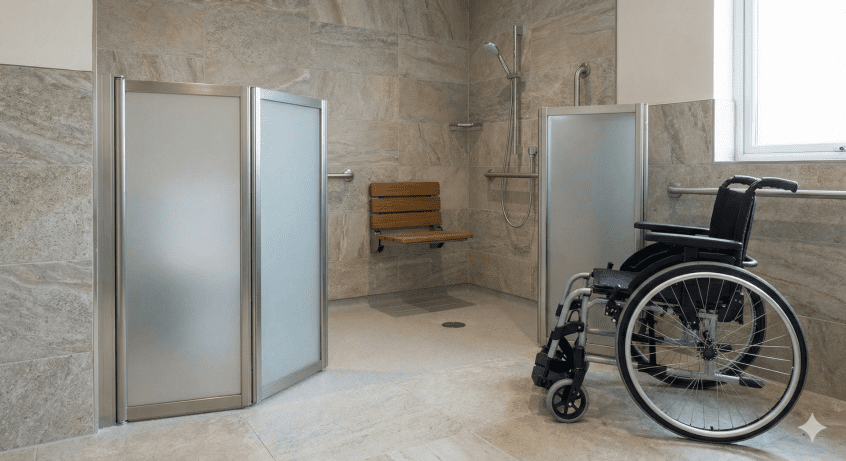
| Half-height bi-fold doors | Assisted showering with a carer | 1200mm x 800mm and up | Very good |
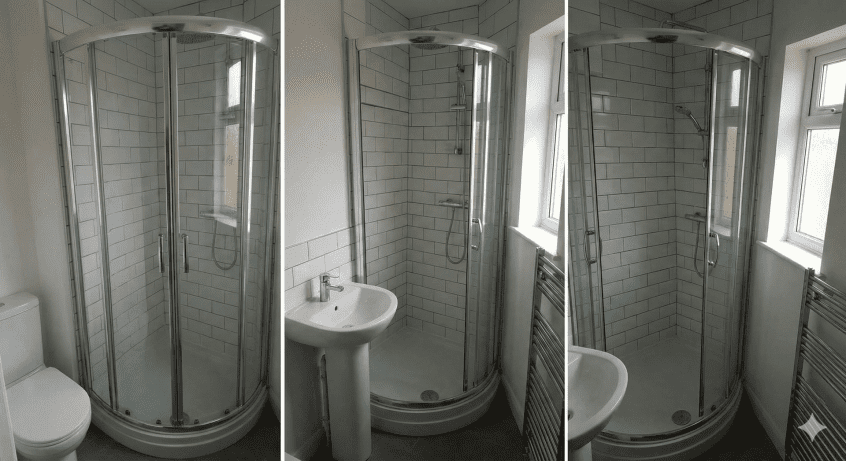
| Quadrant | Tight en-suites and cloakroom conversions | 800mm or 900mm quadrant | Good |
| Walk-through | Long, narrow “galley” rooms | 1200mm x 700mm and up | Very good |
Part 1: The five layouts that make the biggest difference
1. The corner entry
If your room is roughly square, the corners are your best asset.
- The layout: a 900mm x 900mm square tray tucked into the corner, with the shower head on the wall furthest from the door.
- The detail that matters: sliding or inward-folding bi-fold doors rather than a pivot door.
- Why it works: nothing swings out into the room, so the centre of the floor stays clear for a walking frame or a wheelchair turning circle, and the basin doesn’t get hit by the door.
- Best for: square bathrooms around 1.8m x 1.8m.
- Less suitable for: very narrow rooms where the width is the problem rather than the length.
2. The alcove swap (bath replacement)
Most UK bathrooms have the bath sitting between three walls. That alcove is the easiest place in the house to put a walk-in shower.
- The layout: remove the standard 1700mm bath and fit a 1700mm x 700mm shower tray in exactly the same footprint.
- The detail that matters: a sliding door across the full front, or a single fixed screen if the room is warm enough.
- Why it works: you get a generous double-length shower without changing the shape of the room, and because the waste and soil pipes stay where they are, the installation is quicker and cheaper.
- Best for: a like-for-like bath replacement with the least disruption.
- Less suitable for: wheelchair users who need a wide, straight entry; a 700mm-deep tray can feel narrow to transfer into.
3. Half-height bi-fold doors (for assisted showering)
If someone helps you shower, full-height glass gets in the way and leaves the carer soaked.
- The layout: a tray fitted with half-height bi-fold doors that fold flat against the wall when not in use.
- The detail that matters: the doors stop at roughly waist height, so a carer can reach over them while staying dry.
- Why it works: when the shower isn’t running, the tray becomes part of the floor again, which gives back all the turning space a small room needs.
- Best for: assisted showering and carer access.
- Less suitable for: high-pressure power showers, which can splash over the top of the doors.
4. The quadrant (curved) tray
The classic answer for a tight en-suite.
- The layout: a curved tray that sits in the corner, shaped like a quarter circle.
- The detail that matters: the curve removes the hard right angle of a square tray.
- Why it works: those missing centimetres in the corner are exactly where shins and walking frames catch on a square enclosure.
- Best for: very tight en-suites and cloakroom conversions.
- Less suitable for: anyone who needs to shower seated; the curve reduces leg room inside.
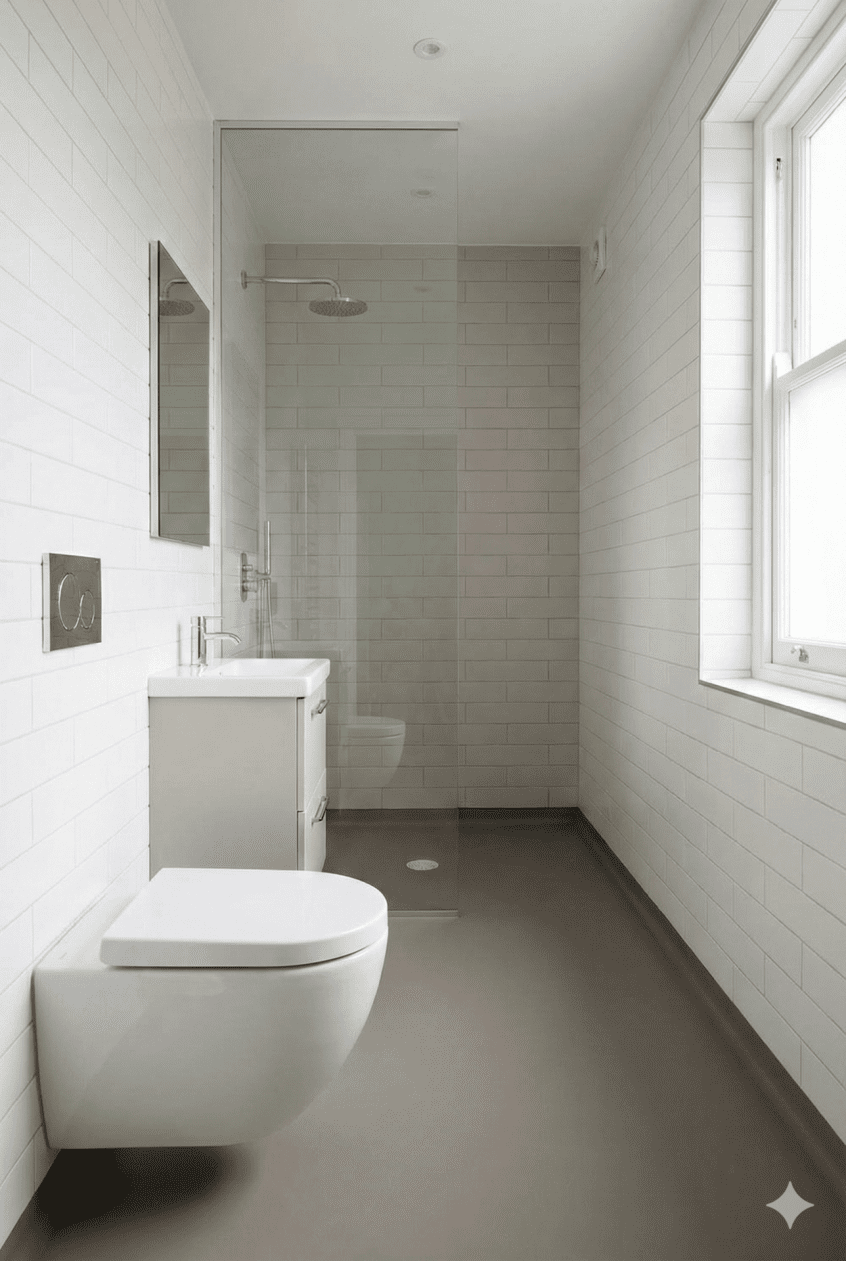
5. The walk-through (galley layout)
In a long, narrow room, less enclosure is more.
- The layout: the tray goes at the far end of the room, separated from the toilet by a single fixed glass screen.
- The detail that matters: leave the entry open, with no door at all.
- Why it works: the back of the room becomes a wet zone and the toilet and basin at the front stay dry, with nothing to open, close or squeeze past.
- Best for: long, narrow Victorian-style bathrooms.
- Less suitable for: cold rooms; an open shower can feel draughty without good heating.
Planning a walk-in shower or wet room?
Our surveyors design and fit accessible bathrooms across the UK. Book a free home visit: we plan the layout with you, check whether you qualify for 0% VAT, and give you a fixed-price quote with no obligation.
 Book a Free Design Visit
Which? Trusted Trader · Free home visits across the UK · Lifetime installation guarantee · 0% VAT if you qualify
Part 2: Fittings that give space back
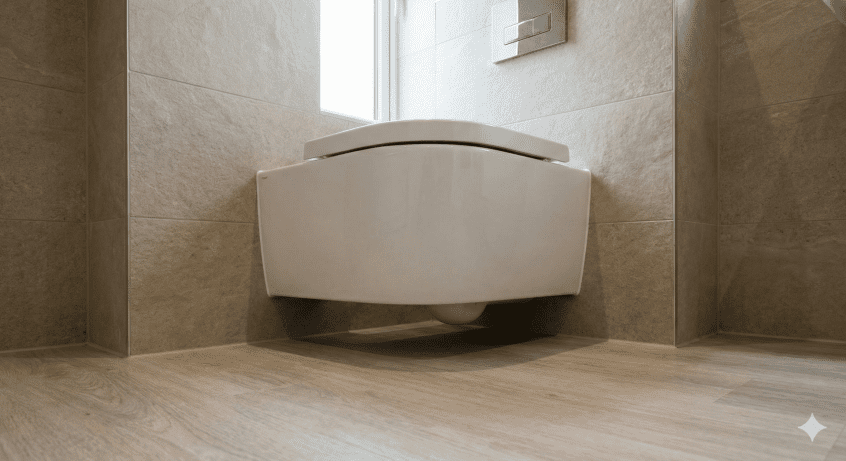
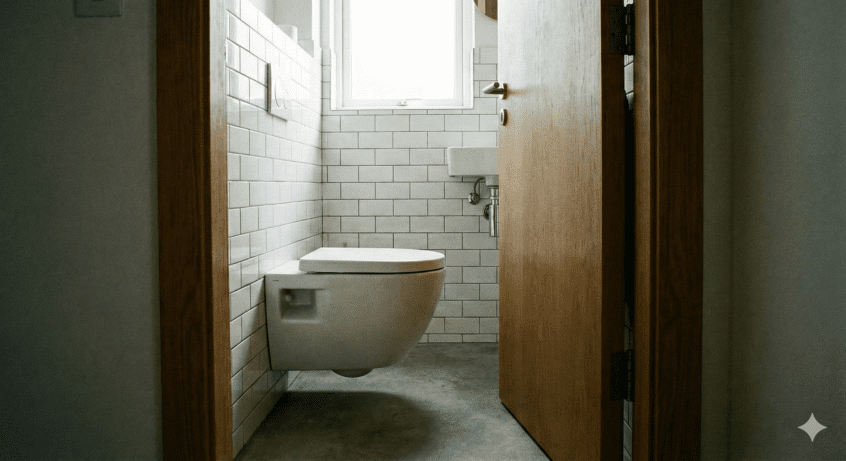
6. Wall-hung toilets
A standard close-coupled toilet takes up around 200mm of depth in its cistern alone.
- The idea: hide the cistern inside the wall or a slimline cabinet, and mount the pan on a concealed steel frame so it sits clear of the floor.
- Why it works: seeing continuous floor under the toilet makes the room read as larger, and the floor is far easier to keep clean.
- Best for: creating a sense of space and better hygiene.
- Less suitable for: unreinforced stud walls; the frame needs a solid fixing.
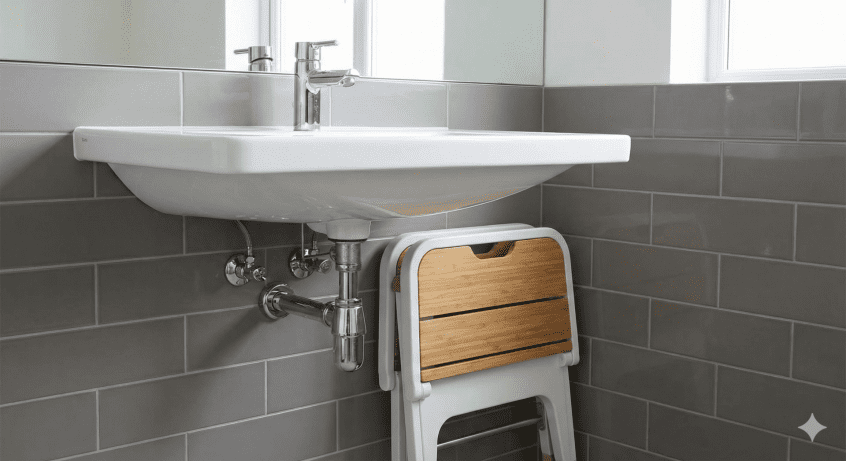
7. Wall-mounted basins (for wheelchair access)
A pedestal basin blocks exactly the space a seated user needs.
- The idea: remove the pedestal and fix the basin directly to the wall with a chrome bottle trap.
- The detail that matters: run the waste into the wall rather than down to the floor.
- Why it works: it creates knee space, so a wheelchair user can get close enough to the taps to use them comfortably.
- Best for: wheelchair users and anyone who washes seated.
- Less suitable for: households that need cupboard storage under the basin.
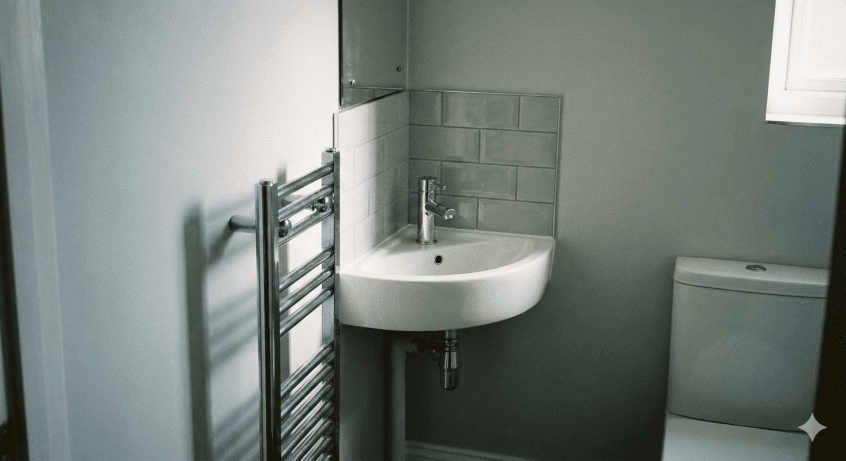
8. Corner basins
Corners are usually dead space in a rectangular bathroom.
- The idea: a small curved basin mounted across the corner, with a single monobloc mixer to save rim space.
- Why it works: it frees the main flat wall for the things that need it, such as a towel radiator or a grab rail.
- Best for: cloakrooms and very small en-suites.
- Less suitable for: anyone who wants a full-size basin for washing at.
9. Short-projection toilets
Toilets are not all the same size, and the difference is bigger than it sounds.
- The idea: ask specifically for a short-projection or compact pan, which projects around 600mm from the wall instead of 700mm or more.
- Why it works: in a tiny UK bathroom, 100mm can be the difference between the door opening fully and the door hitting the pan.
- Best for: narrow rooms where the door swings close to the toilet.
- Less suitable for: very tall users, who may find the seat a little small.
10. Low-profile shower trays
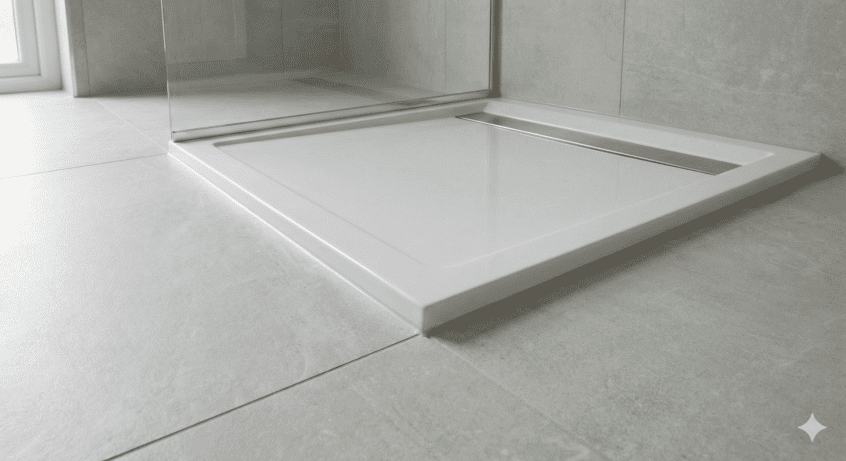
Older trays sit on legs and need a real step up. That step is a trip hazard in any room, and a serious one in a small room where there is nowhere to steady yourself.
- The idea: a slimline tray around 35mm high, sunk slightly into a timber floor where possible to lower it further.
- Why it works: less bulk makes the floor look continuous, and the lower step is much easier to manage with a walking aid.
- Best for: ambulant users and anyone who wants a modern, low-line look. If you need no step at all, see our guide to level access showers.
- Less suitable for: solid concrete floors where gravity drainage isn’t possible without a pump.
Part 3: Heating and storage without losing wall space
11. Underfloor heating instead of a radiator
A radiator takes a whole run of wall that you may need for a grab rail or a shower seat.
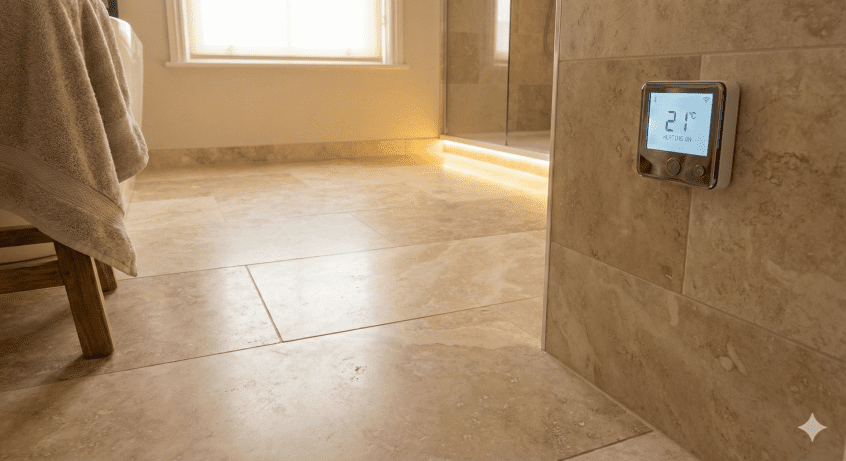
- The idea: electric underfloor heating mesh under the tiles or vinyl, on a programmable thermostat.
- Why it works: the walls are freed up, and a warm floor dries quickly after a shower, which reduces slip risk.
- Best for: rooms where every wall is spoken for.
- Less suitable for: very cold houses, where you may still want a towel rail as back-up.
12. Recessed niches instead of wire racks
Wire shower caddies rust, protrude into the shower, and are exactly what you’d catch yourself on in a fall.
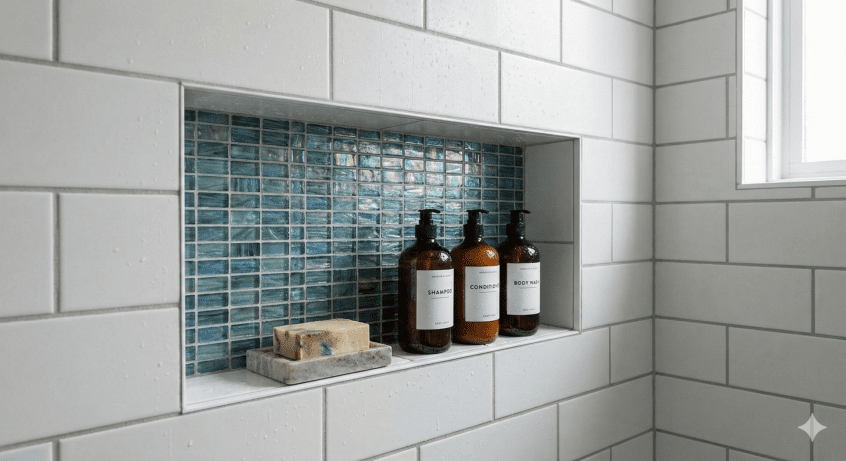
- The idea: tiled shelves built into the wall cavity between the timber studs, with a slight slope so water runs off.
- Why it works: storage that takes up no room space and has no sharp edges.
- Best for: keeping bottles within reach in a tight shower.
- Less suitable for: solid brick walls, where cutting a recess is messy and slow.
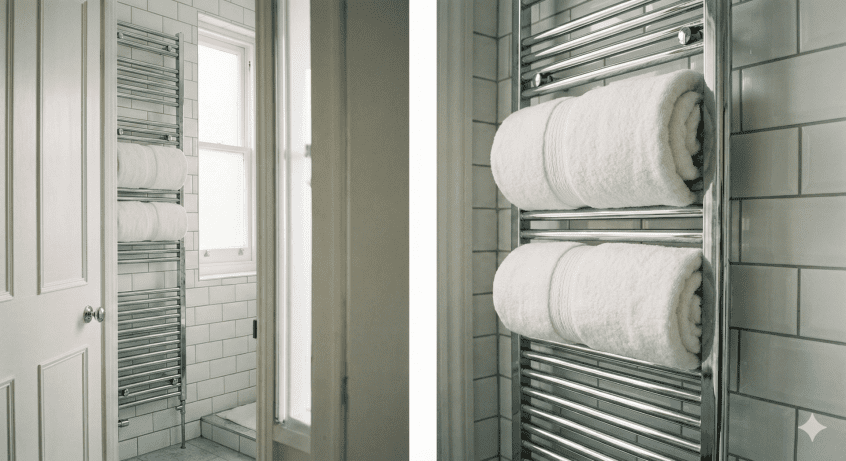
13. Tall, narrow towel rails
If you do need a radiator, go up rather than across.
- The idea: replace a wide horizontal radiator with a tall heated towel rail, often only 300mm wide, fitted behind the door or at the end of the old bath footprint.
- Why it works: you keep the heating and warm towels without taking the long wall you may need for a handrail.
- Best for: narrow gaps and awkward corners.
- Less suitable for: heating a large room on its own.
14. Recessed mirror cabinets
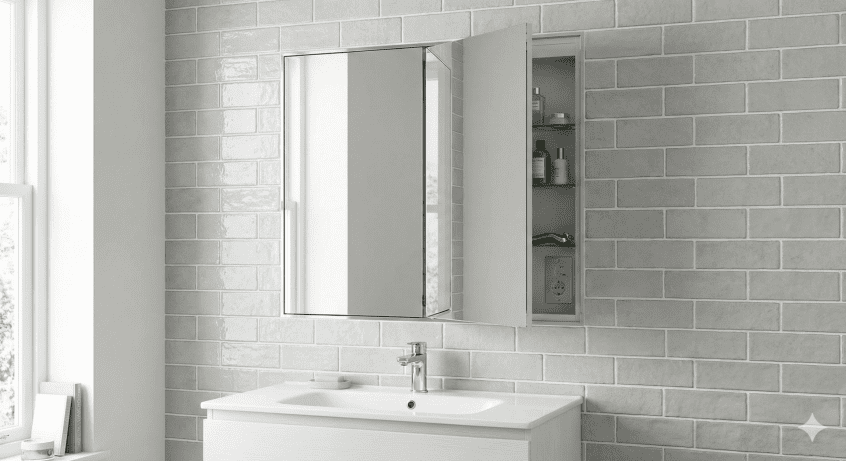
A separate mirror, cupboard and wall light is three things on one small wall.
- The idea: recess a mirror cabinet into the wall above the basin so it sits flush with the tiles, ideally with an integrated light and shaver socket.
- Why it works: storage, lighting and a mirror in one, with nothing protruding at head height.
- Best for: keeping medicines and razors out of reach and out of sight.
- Less suitable for: load-bearing walls that can’t be recessed.
15. A sliding pocket door
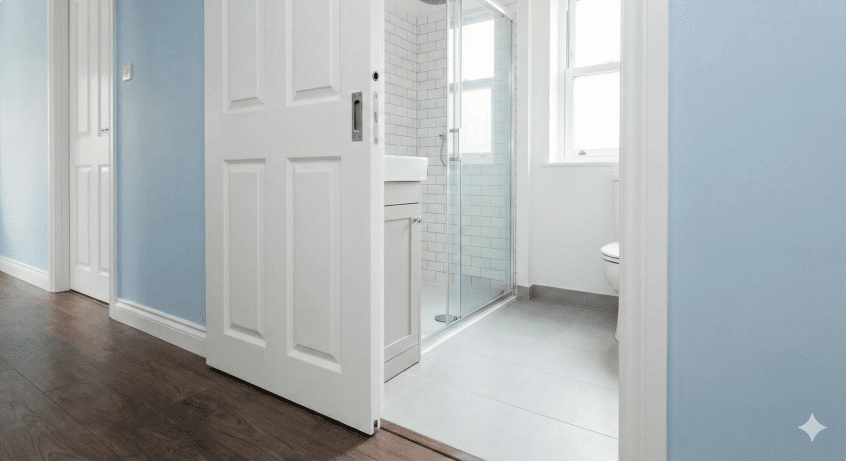
The single biggest space reclaimer in the room is usually the bathroom door itself.
- The idea: replace the hinged door with a pocket door that slides into a metal cage built inside the wall.
- Why it works: a hinged door swinging inwards can take close to a square metre of floor out of use. A pocket door gives that back, which in a small room is often the difference between a wheelchair being able to turn or not.
- Best for: small en-suites and downstairs toilets.
- Less suitable for: walls that carry pipework or cables; the pocket cavity has to be empty.
Part 4: Finishes that make a small room feel bigger and safer
16. Frameless glass
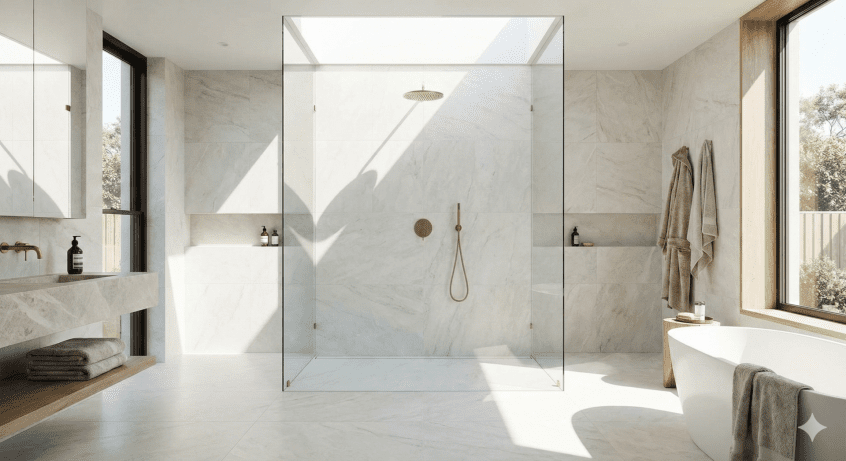
- The idea: frameless screens in 8mm or 10mm toughened glass, with no metal edging.
- Why it works: thick frames break up your line of sight and shrink the room visually. Clear, frameless glass all but disappears.
- Best for: a light, open feel in a boxed-in room.
- Less suitable for: very uneven walls, where a frame helps hide the gaps.
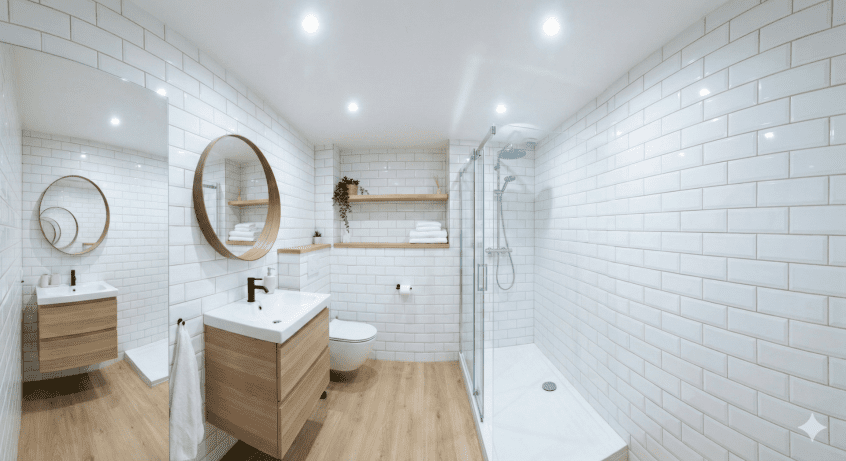
17. Light colours and large-format tiles
- The idea: white or pale gloss tiles, light wood-effect safety flooring, bright daylight LEDs, and large tiles to keep grout lines to a minimum.
- Why it works: light surfaces reflect light rather than absorbing it, which matters most in an internal bathroom with no window.
- Best for: windowless bathrooms.
- Less suitable for: anyone who wants a darker, cosier scheme.
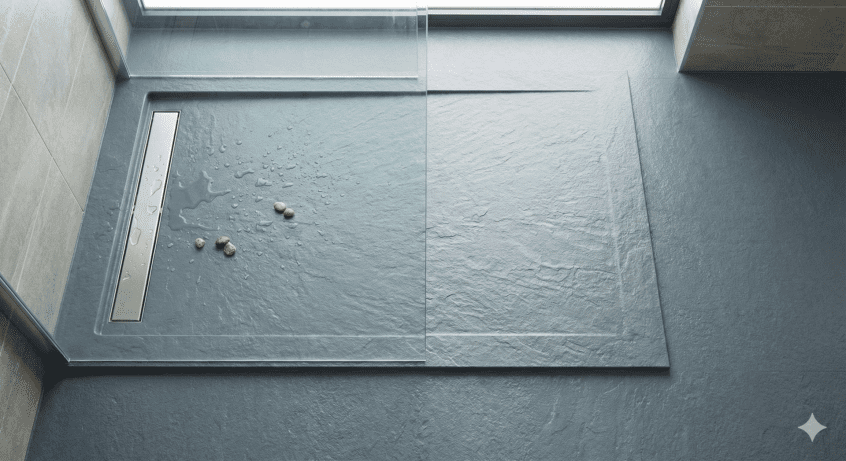
18. Continuous flooring
- The idea: match the floor to the shower tray, for example a slate-effect tray with slate-effect safety vinyl.
- Why it works: if the floor reads as one surface from the door to the drain, the room feels wider than it is.
- Best for: making a narrow room feel less like a corridor.
- Less suitable for: white trays, unless the floor is white too.
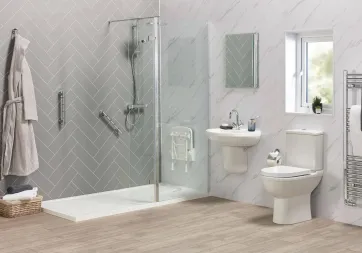
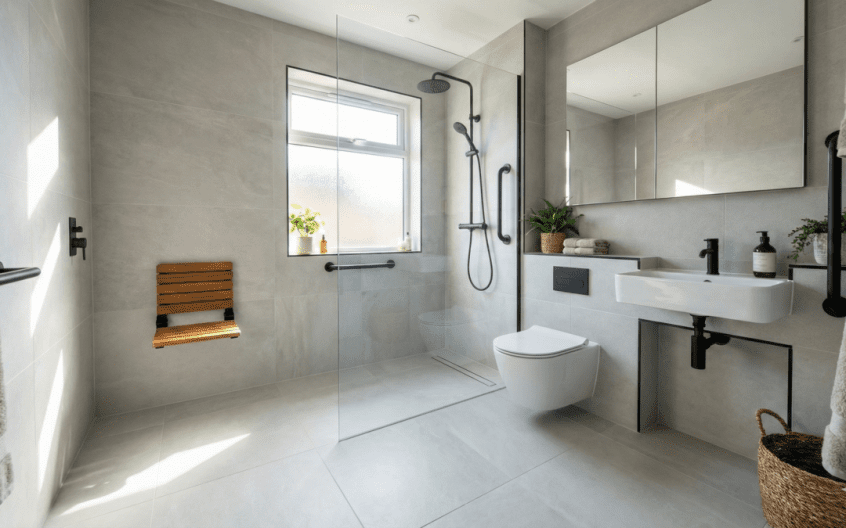
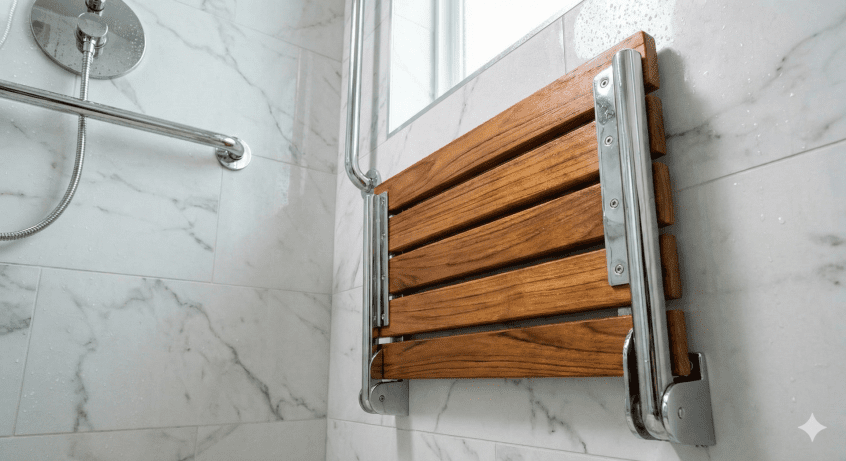
19. A fold-down shower seat
- The idea: a bamboo or teak fold-down seat on chrome brackets, mounted at a height measured for the person using it.
- Why it works: it looks like a spa fitting rather than a medical aid, and it folds flat against the wall when someone wants to stand, saving around 400mm of depth.
- Best for: bathrooms shared by people with different needs.
- Less suitable for: bariatric users, who need a seat with legs to the floor.
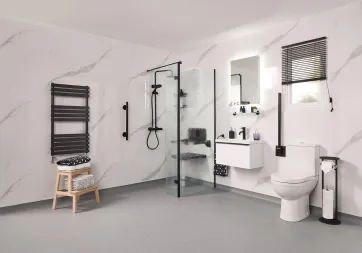
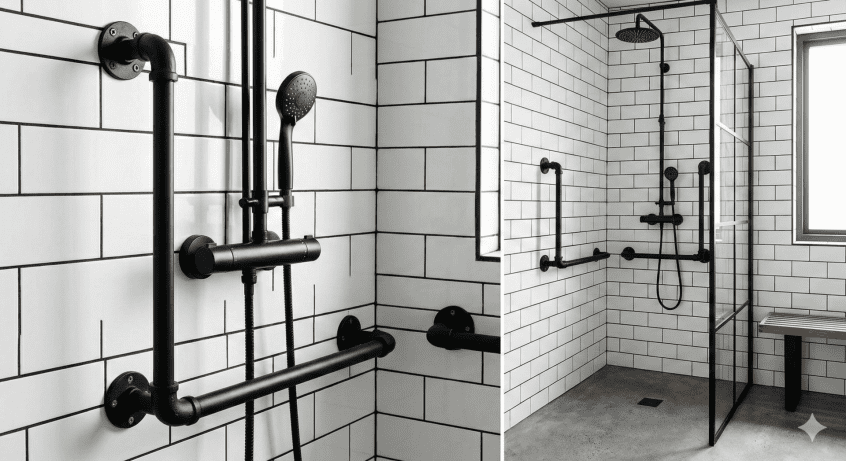
20. High-contrast grab rails
- The idea: matt black rails on white tiles, matched to black taps and shower fittings.
- Why it works: it reads as a deliberate design choice, and the contrast makes the rails easy to see for anyone with reduced vision or dementia. Our grab rail positioning guide covers where they should go.
- Best for: visual impairment and dementia-friendly design.
- Less suitable for: dark tiled walls, where black rails would vanish.
Part 5: The details that are easy to miss
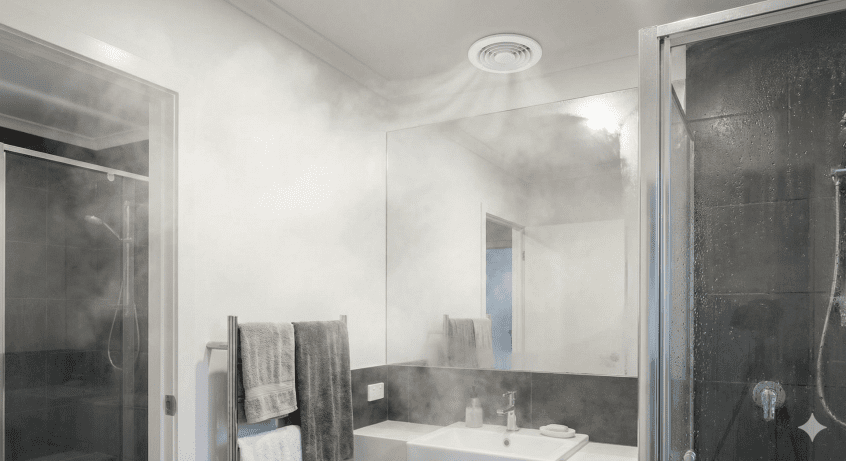
21. Powerful extraction
- The idea: an inline extractor fan in the loft above the bathroom, wired to the light switch with a timed overrun.
- Why it works: steam builds up almost instantly in a small room and settles on the floor as water. Clearing it quickly keeps the floor safer and keeps mould away.
- Best for: windowless bathrooms.
- Less suitable for: ground-floor flats with no ceiling void.
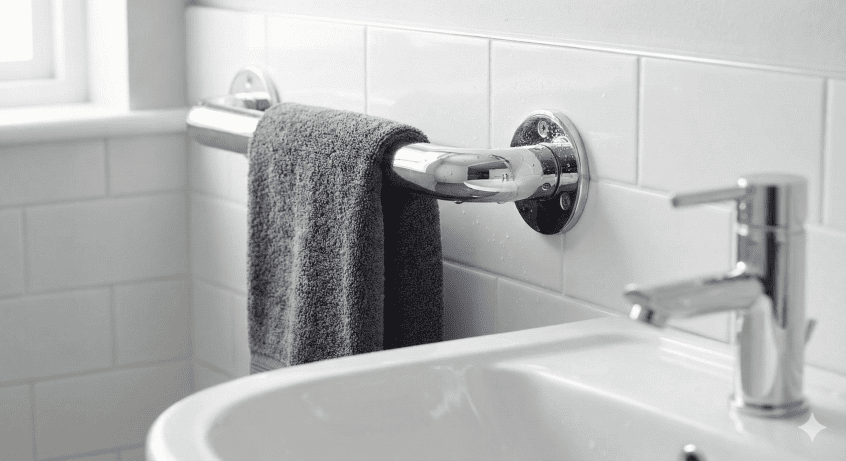
22. Dual-purpose grab rails
- The idea: rails that also serve as a towel rail, soap dish or toilet roll holder.
- Why it works: one fitting instead of two, so the walls stay uncluttered and the rail is always where you reach for it.
- Best for: tiny rooms where every centimetre of wall is precious.
- Less suitable for: anyone who needs to put their full weight through a rail every time; a dedicated grab rail is stronger.
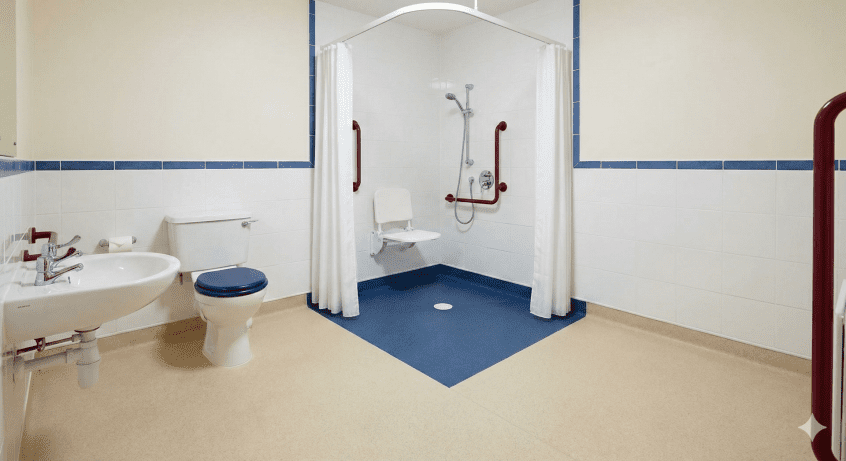
23. Visual zoning for dementia
- The idea: a different colour floor inside the shower area, contrasting with both the surrounding floor and the walls.
- Why it works: it marks the wet zone clearly for someone with a cognitive impairment, so they aren’t caught out by a change in surface.
- Best for: dementia-friendly bathrooms.
- Less suitable for: anyone set on a single, continuous floor.
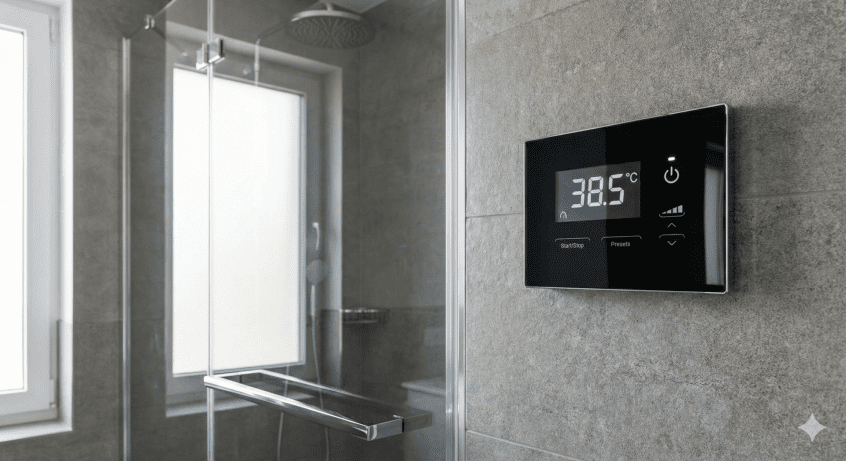
24. Digital shower controls
- The idea: a digital shower with the processor hidden in the loft or a cupboard and the control panel mounted outside the enclosure.
- Why it works: the water can be turned on and brought to temperature before anyone steps in, which removes the cold-water flinch and the scald risk at the same time.
- Best for: anyone unsteady on their feet, and anyone who is helped to shower.
- Less suitable for: tight budgets; a thermostatic bar mixer is the more affordable safe option.
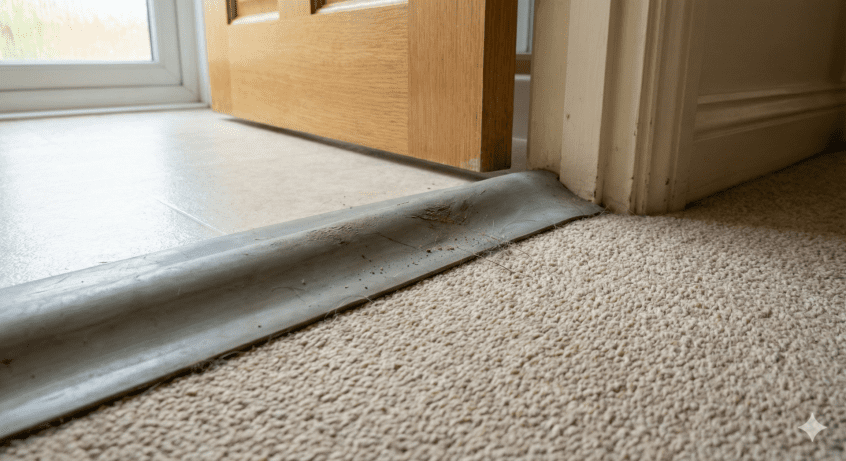
25. A threshold strip at the door
- The idea: a discreet rubber threshold at the bathroom door, ideally a collapsible type that a wheelchair rolls over.
- Why it works: in a small bathroom, water gets everywhere. The strip stops it escaping under the door onto a landing carpet.
- Best for: upstairs bathrooms with carpet outside.
- Less suitable for: fully level-access wet rooms, where the floor itself should be doing this job.
Shower tray or wet room? Choosing for a small bathroom
Many people assume a small bathroom has to become a wet room. It doesn’t. A tray-based walk-in shower keeps the rest of the floor dry, is usually quicker to install, and works well for anyone who can manage a step of a few centimetres. A level-access tray or a fully tiled wet room floor is the better choice when a wheelchair, shower chair or a carer needs to move in and out freely. Our small wet rooms page shows what a fully level floor looks like in rooms of this size, and our walk-in showers range covers the tray-based options in this guide.
Minimum dimensions to check before you plan
Don’t guess whether something will fit. These are the clearances we work to in small UK bathrooms:
| Item | Minimum clearance |
|---|---|
| Doorway | 800mm clear opening for wheelchair access |
| Toilet position | 700mm between walls or units either side |
| Shower entry | 500mm for an ambulant user; 850mm for a wheelchair |
| Space in front of the shower | 600mm clear floor to step in and out safely |
| Transfer space beside the toilet | 750mm for a side transfer from a wheelchair |
| Shower tray for seated use | 900mm x 900mm as a working minimum; 1000mm x 1000mm is more comfortable |
These figures are our working minimums for domestic adaptations. If an occupational therapist has assessed you, their recommendations take priority, and our surveyors will design to them.
What our surveyors check in a small bathroom
Every home assessment we do in a small bathroom follows the same order, because the answers decide which of the 25 ideas above are actually available to you:
- Where the waste pipes are. Keeping the shower over the existing bath waste is the biggest single cost saver.
- What the floor is made of. Timber floors can be lowered for a level or low-profile tray; concrete usually can’t without a pump.
- Which way the door opens, and whether it can be changed. A pocket or outward-opening door often solves more than any other change.
- How you get in and out today, and who helps. Assisted showering points us towards half-height doors and a seat; independent wheelchair use points towards level access and transfer space.
- Where the heating can go once the walls are needed for rails and a seat.
It’s also worth knowing that if the shower is being installed because of a long-term condition or disability, the work may qualify for 0% VAT. Our VAT relief guide explains who is eligible, and our walk-in shower cost guide gives current UK price ranges for the layouts above.
Frequently asked questions
What is the smallest bathroom you can fit a walk-in shower in?
A room of around 1.2m x 1.7m can take a 900mm x 900mm corner shower alongside a toilet and a small basin, provided the door is sliding or bi-fold rather than hinged. The tray itself can go down to 800mm square in a cloakroom, but 900mm is the realistic minimum for showering comfortably, and 1000mm x 1000mm if you’ll be seated.
Can I replace my bath with a walk-in shower in a small bathroom?
Yes, and it is the most common job we do. A standard 1700mm bath alcove takes a 1700mm x 700mm tray without moving any pipework, which keeps the cost and disruption down. The result is a much larger showering area than an over-bath shower, with no bath edge to climb over.
Do I need a door on a walk-in shower?
Not always. A single fixed screen is enough in a warm room where the shower head points away from the opening. A door or half-height bi-folds are worth having if the room is cold, if a carer needs to stay dry, or if the toilet sits directly opposite the shower.
Is a walk-in shower or a wet room better for a small bathroom?
A tray-based walk-in shower keeps the rest of the floor dry and suits anyone who can manage a low step. A wet room or level-access tray is better for wheelchair users, shower chairs and assisted showering, because there is nothing to step over at all. In very small rooms, a level floor also makes the whole room feel like one space.
How much does a walk-in shower cost in a small bathroom?
Cost depends far more on what has to move than on the size of the room. A like-for-like bath replacement is the cheapest option; moving the shower to a different wall, lowering a floor for level access, or adding a pocket door adds to the price. Our walk-in shower cost guide sets out current UK ranges, and eligible customers pay 0% VAT.
Will replacing the only bath in the house devalue it?
In a small bathroom, usually not. A cramped bath that fills the room is rarely a selling point, while a well-finished walk-in shower reads as a modern, usable space. If you have a second bathroom, keeping one bath is sensible. If this is the only bathroom and you can’t use the bath safely, a good shower is worth more to you now and to most buyers later.
What are the UK building regulation dimensions for an accessible shower?
For domestic adaptations, the clearances we design to are an 800mm clear door opening, 600mm of clear floor in front of the shower, 750mm beside the toilet for a side transfer, and a shower area of at least 900mm x 900mm for seated use. Approved Document M sets out the accessibility standards for new dwellings; in existing homes, your occupational therapist’s assessment is the guide we follow.
How long does a small bathroom conversion take?
A bath-to-shower conversion that keeps the existing pipework is typically completed in a few days. Full re-layouts with a new floor, pocket door and rewired heating take longer. We’ll give you a firm schedule after the home assessment, once we know what’s under the floor and behind the walls.
Let us plan your space
You don’t need a large bathroom to have a safe one. You need the right layout for the room you have, measured properly.
Our surveyors work in small bathrooms every week. They will tell you which of these layouts gives you the most safety in the space you have, and which ones aren’t worth the money in your room.

Simon
Clients’ Needs Assessor
Simon brings extensive experience from the healthcare sector, having spent over 25 years working alongside physiotherapists and occupational therapists.
Free · No obligation · UK-wide
Ready for a safer, easier bathroom?
Tell us a little about your bathroom and one of our own surveyors will visit at a time that suits you, anywhere in the UK. You'll get honest advice and a fixed-price quote to consider in your own time.
- Rated 4.9 by Which? Trusted Traders
- Our own installers, never subcontracted
- 0% VAT on eligible installations
- Lifetime installation guarantee
Prefer to talk? Call free on 0800 955 8810