

Last Updated on October 13, 2026
As we age, our mobility naturally decreases, leading to increased risks of falls and injuries, particularly in the bathroom. Statistics reveal that about 1 in 3 adults over 65 will experience at least one fall per year, with half of these individuals experiencing more frequent falls. The bathroom, specifically the toilet area, is one of the most common places where these accidents occur. Ensuring that your bathroom is mobility-friendly is crucial in preventing such incidents, and one effective solution is installing a high toilet seat.
The Importance of a High Toilet Seat
A low toilet seat height requires users to lower themselves further, increasing the risk of slips and falls. For individuals with mobility impairments, such as arthritis, this can be particularly challenging and dangerous. A high toilet seat is an essential addition to any bathroom designed for the elderly or those with limited mobility. It not only reduces the risk of falls but also enhances the user’s independence and comfort while performing personal hygiene tasks. Let’s explore the key benefits of installing a high toilet seat.
1. Enhanced Stability
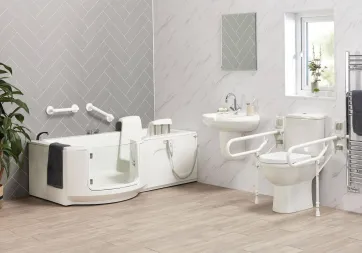
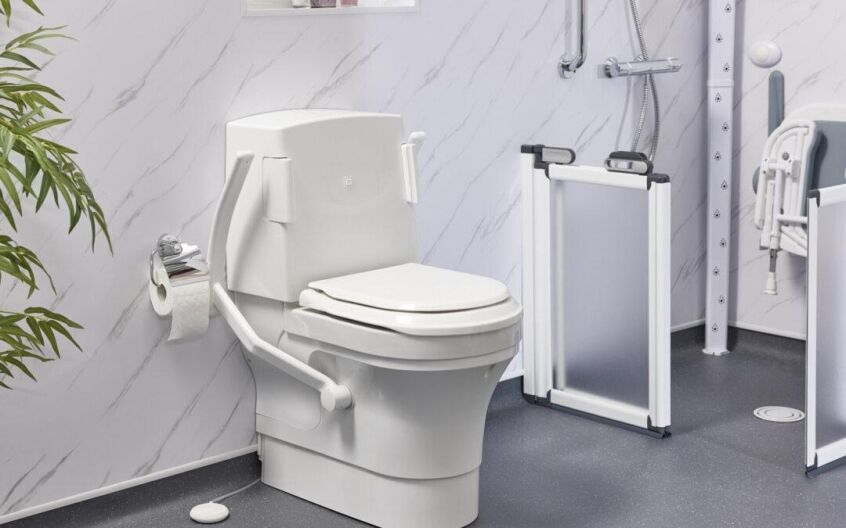
High toilet seats offer greater stability, reducing the strain on joints such as the knees and hips. By raising the seat height, users can sit down and stand up more easily, minimising the risk of losing balance. For added security, many high toilet seats come with grab rails or can be paired with additional support bars. This combination provides a stable and secure environment, allowing users to maintain their independence and confidence when using the bathroom.
2. Increased Safety
Safety is a primary concern for the elderly and those with mobility issues. High toilet seats provide a more secure base for sitting, making it easier to rise without the fear of slipping or falling. When combined with strategically placed grab rails, users can move around the bathroom with greater safety and reduced risk of accidents. This added layer of protection is especially important for individuals who may have difficulty maintaining balance or who are prone to falls.
3. Joint Pain Relief
For individuals suffering from arthritis or other joint-related conditions, bending and squatting can be extremely painful. High toilet seats help alleviate this discomfort by reducing the need to bend the knees and hips as much. This reduction in strain on the joints makes the process of sitting down and standing up from the toilet significantly more comfortable, allowing for a more pleasant and pain-free bathroom experience.
4. Easy Installation and Maintenance
High toilet seats are designed for easy installation, making them a practical addition to any bathroom. Most models come with adjustable fixing brackets that securely attach the seat to the toilet, ensuring stability during use. These seats are also easy to clean, typically requiring just a quick wipe down with disinfectant or an antibacterial wipe. If you’re considering a more permanent solution, you can opt for a higher toilet pan, which can be installed as part of an accessible bathroom renovation.
5. Reduced Impact on Joints
For individuals with mobility-related conditions, reducing the impact on joints is crucial to maintaining comfort and preventing pain. A high toilet seat minimises the distance users need to lower themselves, reducing the strain on the knees and hips. This is especially beneficial for those with conditions like arthritis, where joint inflammation and pain can make everyday activities challenging.
6. Improved Safety for Caregivers
It’s not only the person using the toilet who benefits from a high seat. Carers also experience improved safety. Assisting someone in sitting down or standing up from a low toilet seat can put a significant strain on the caregiver, increasing the risk of injury. A high toilet seat reduces the distance the person needs to be lowered or lifted, making the task easier and safer for the caregiver. Additionally, using tools like grab bars alongside a high toilet seat can further enhance safety for both the user and the caregiver.
7. Boosted Confidence and Independence
Maintaining independence is a key concern for many elderly individuals and those with mobility issues. Using the bathroom is a deeply personal activity, and the ability to do so unassisted is important for preserving dignity and self-esteem. A high toilet seat allows users to manage their personal hygiene with greater ease, reducing the need for assistance and boosting their confidence. This increased independence can significantly improve the quality of life and overall well-being of the user.
Who Can Benefit from a High Toilet Seat?
While high toilet seats are particularly beneficial for taller individuals, they are essential for anyone experiencing mobility challenges, especially the elderly and those with disabilities. Reducing the distance the user needs to bend to reach the seat minimises joint strain and provides a safer, more comfortable experience.
Want it fitted properly, first time?
Rails, raised toilets, seats and ramps only help if they're positioned for the person using them. Book a free home visit and our surveyor will assess the room and recommend exactly what you need, with a fixed-price quote.
 Book a Free Home Assessment
Which? Trusted Trader · Free home visits across the UK · Lifetime installation guarantee · 0% VAT if you qualify
Key Considerations When Choosing a High Toilet Seat
When selecting a high toilet seat, several factors need to be considered to ensure it meets the user’s needs:
- Size: High toilet seats come in various shapes and sizes to accommodate different toilet designs. Consider the distance between the floor and the toilet seat, the weight of the user, and the shape of the existing toilet seat when making your selection.
- Toilet Lid: For those who value discretion, some high toilet seats come with a lid that blends in with the bathroom decor. These seats can be installed between the existing toilet lid and the bowl, providing a functional yet discreet solution.
- Height: The appropriate height for a raised toilet seat depends on the user’s height, the current toilet seat height, and the user’s weight. High toilet seats are available in various heights to cater to different needs.
Conclusion: Why a High Toilet Seat is a Must-Have
A high toilet seat can make a significant difference in your ability to use the bathroom independently and safely. Not only does it enhance the user’s comfort and reduce the risk of falls, but it also offers peace of mind to both the user and their caregivers. Most high toilet seats are easy to install, use, and maintain, making them a practical and affordable solution for improving bathroom safety.
If you or a loved one struggles with mobility, investing in a high toilet seat is a wise decision. It can greatly improve daily routines, reduce the risk of injury, and promote greater independence. For those considering a broader bathroom upgrade, such as replacing a bath or shower, be sure to explore options that include accessible features like walk-in baths and walk-in showers. Feel free to request a free brochure from EA Mobility to learn more about how we can help make your bathroom safer and more comfortable.
Frequently Asked Questions
Q: What is the standard height of a toilet, and why does it cause problems for older people?
A: The standard toilet height in the UK measures approximately 40–41 cm from floor to the top of the seat. This dimension was never designed with ageing joints in mind. It was simply a manufacturing convention that became the industry norm. For a younger adult with full hip, knee, and ankle mobility, 40 cm presents no difficulty. For someone with osteoarthritis of the knee or hip, reduced quadriceps strength, or post-surgical hip precautions, dropping 40 cm onto a toilet seat and then pushing back up from that position places enormous strain on the lower limb joints and significantly increases the risk of a fall. A raised toilet or high-seat toilet typically brings the seating height to 46–48 cm, which aligns far more closely with the natural seated position and requires considerably less muscular effort to transfer on and off.
Q: What are the key benefits of a raised or high toilet seat for elderly users?
A: The core benefit is mechanical: a higher seat reduces the angle through which the hips and knees must flex during the sit-to-stand movement. Less flexion means less force required from the thigh muscles, less torque through the knee joint, and less compression through the hip. For someone with a total hip replacement, keeping hip flexion above 90 degrees is a clinical requirement in the recovery period. A standard toilet would break that precaution, and a raised seat resolves it. Beyond joint protection, a higher toilet reduces the time spent in a vulnerable near-floor position, lowers the risk of falls during transfer, and significantly improves confidence. This is especially true for people who have previously struggled to get up from a low toilet and worry about becoming stuck.
Q: What is the difference between a toilet seat riser, a raised toilet seat, and a high toilet bowl, and which is the right choice?
A: These three terms describe different solutions to the same problem. A toilet seat riser (also called a toilet seat raiser or toilet seat attachment) is a clip-on frame that sits between the existing toilet pan and the existing seat, raising the total height by 5–15 cm depending on model. A raised toilet seat is an integrated replacement seat that is slightly deeper than the standard seat, adding 5–10 cm. A high toilet bowl (or comfort height toilet) has a completely different pan height. The porcelain pan itself is manufactured taller, typically 46–50 cm to the rim rather than the standard 37–40 cm. For renters or those who need a temporary solution, a riser is ideal. For permanent installations, a comfort-height wall-hung or close-coupled toilet is the better long-term choice.
Q: What is a toilet seat riser with cushioning, and does the cushioning actually make a difference?
A: A cushioned toilet seat riser adds a layer of foam or gel padding to the raised seating surface. For most users, cushioning makes a modest but real difference to comfort, particularly for those who spend longer periods on the toilet due to constipation, reduced bowel motility, or neurological conditions affecting the bowel. The padding distributes pressure more evenly than a hard plastic surface, reducing discomfort during extended use. The practical concern with cushioned risers is hygiene: foam and gel materials are more difficult to clean thoroughly than smooth plastic or ceramic, and in communal or care home settings this matters more. For home use where the riser is used by one person and cleaned regularly, cushioning is a worthwhile addition.
Q: Is a raised vinyl toilet seat attachment a risk for injury, and what should you look for to make one safe?
A: A raised vinyl seat can absolutely be a risk if it is poorly fitted or the wrong specification for the toilet it is placed on. The two failure modes are: first, the riser shifting or rocking during use because the fixing brackets are not compatible with the pan shape. This is the most common cause of toilet-related falls involving raised seats. Second, the seat flexing or cracking under the user’s weight because the material grade is insufficient. A safe raised vinyl seat must have a locking mechanism that firmly engages the underside of the pan rim, a weight rating clearly stated on the product (typically 130–160 kg minimum for standard models, 200+ kg for bariatric models), and no perceptible movement when tested before use.
Q: What is the correct recommended toilet height for elderly and senior users?
A: The recommended toilet height for elderly users, as referenced in BS 8300:2018 (the British Standard for accessible design), is 46–48 cm from floor level to the top of the seat. Some specifications, particularly for users with a total hip replacement or significant arthritis, recommend up to 50 cm. The critical measurement is the relationship between the toilet seat height and the user’s own knee height when standing: the ideal is that the toilet seat sits approximately level with or fractionally below the back of the user’s knee. A too-tall toilet causes the feet to lose contact with the floor, which removes a key stability point during the transfer. For most older adults, the right height falls in the 46–50 cm range.
Q: What is a wall-hung or wall-mounted toilet, and is it a better choice for disabled or elderly users than a standard floor-standing pan?
A: A wall-hung toilet is fixed directly to the wall via a concealed frame rather than sitting on the floor. The most significant practical advantage for disabled and elderly users is height adjustment. Unlike a standard floor-standing toilet, where the pan height is fixed at manufacture, a wall-hung toilet can be installed at any height within the cistern frame’s range, typically 38–58 cm. This means the installer can set the toilet at the precise height recommended by an occupational therapist for that individual. A secondary benefit is floor clearance: the unobstructed floor beneath a wall-hung toilet is easier to clean and allows better access for a wheelchair footrest. The main consideration is structural: the wall must be able to take the cistern frame load.
Q: How does a high toilet seat help someone with arthritis, and which joints does it protect most?
A: The joints most relieved by a high toilet seat in arthritis are the knees, the hips and, less obviously, the lumbar spine. When lowering onto a standard 40 cm toilet, the knees must flex through approximately 100–110 degrees, which is close to the maximum range before significant quadriceps loading begins. In a knee with osteoarthritis, this loading produces pain and instability. Raising the seat to 46–48 cm reduces the required knee flexion by roughly 20–30 degrees, which falls well within the painless range for many arthritis patients. At the hip, the reduction in flexion angle eases impingement in hips with reduced cartilage. Physiotherapists routinely recommend raised toilet seats as part of arthritis management programmes for exactly this reason.
Q: What is a flush toilet seat and does it provide any benefit for elderly users over a standard seat?
A: A flush toilet seat refers to a seat that sits directly on the pan rim at standard height without a raised profile. The term occasionally overlaps with seats that incorporate a bidet function, called a washlet or smart toilet seat. For elderly users, a standard flush seat at 40 cm height provides no ergonomic benefit over a standard seat. However, a flush seat with integrated bidet function does carry a meaningful benefit: it removes the need for the user to twist, reach and clean after toileting. Those movements are painful, difficult, and a risk for falls in older adults with reduced flexibility. Smart toilet seats with heated water cleansing and air drying are increasingly specified in disability bathrooms precisely because they reduce the physical demands of post-toilet hygiene.
Q: What is a raised toilet with an integrated cistern, and is it better than a separate seat riser for a permanent installation?
A: A raised toilet with an integrated cistern is a purpose-built comfort-height pan and cistern unit. It is a complete toilet at a higher-than-standard height, rather than a standard toilet with an accessory added. For permanent installations where the intent is long-term accessibility, an integrated comfort-height toilet is the superior solution in every respect. It looks like a standard toilet with no visible riser, provides consistent height without any fitting or locking mechanism to maintain, cannot shift or rock during use, and is easier to clean. The installation cost is higher than a clip-on riser, but for an elderly or disabled person using the toilet multiple times daily, the stability, hygiene, and aesthetic advantages justify the investment.
Q: Are high toilets for seniors available on the NHS or through council grants?
A: A toilet seat raiser is classified as a piece of community equipment under NHS and social care provision. For eligible individuals, it can be provided free on loan via an NHS community equipment service following an assessment by a community occupational therapist. The OT assessment is free and can be requested through your GP or directly from the local authority adult social care team. What the NHS loans are typically simple, practical clip-on risers, not comfort-height toilet installations. For a permanent raised toilet installation as part of a full bathroom adaptation, funding may come through the Disabled Facilities Grant (up to £30,000 in England). Note: Grants wording along the lines of Grant applications can be complex and lengthy, often taking 1-2 years to process and requiring detailed eligibility and project criteria. Therefore, we are unable to support these processes and thus our services are focused on clients funding their projects personally so that we can work in a reasonable timescale to offer our clients the best service. We recommend you contact your local council for assistance. Private purchase of a raised toilet seat attachment starts from approximately £25–£80 for a basic riser; a comfort-height wall-hung toilet installation typically falls between £800 and £2,500 installed.
Q: What is the ideal toilet height for a wheelchair user compared to a walking elderly person?
A: The height requirements for a wheelchair user and a walking elderly person diverge meaningfully. A walking elderly person benefits from a toilet seat at 46–48 cm, which is high enough to reduce joint strain during sit-to-stand. A wheelchair user who transfers sideways from their chair onto the toilet needs the toilet seat to be at approximately the same height as their wheelchair seat. That is typically 45–50 cm for a standard manual wheelchair, but it varies by chair model and cushion depth. A toilet that is too high relative to the wheelchair seat makes lateral transfer more difficult, not easier. This is why a wall-hung toilet adjustable within a 38–58 cm range is the most flexible solution for households where the toilet must serve both a wheelchair user and ambulant elderly family members.
Q: How do you choose between a toilet seat attachment, a raised toilet seat, and a comfort-height toilet for an elderly relative at home?
A: The decision framework has three variables: permanence, tenure, and budget. If the need is temporary (post-surgery recovery, a visiting relative, or a trial period), a clip-on toilet seat riser is the right choice. They fit most standard pans, cost £25–£80, and can be removed without any alteration to the bathroom. If the need is permanent and the property is owned, a comfort-height toilet (either a new floor-standing pan or a wall-hung model) is the cleanest, most reliable, and most dignified solution. If the property is rented and the landlord cannot be approached for a structural change, an OT-supplied riser through the NHS community equipment service is the compromise. In all cases, the height chosen should be confirmed against the user’s actual knee height rather than defaulting to a standard raised-seat height.

Connor
Clients’ Needs Assessor
For over six years, Connor has worked closely with Occupational Therapists, gaining in-depth knowledge of specialist equipment like hoists, ramps, and home lifts. This expertise makes even complex adaptations no trouble for him.
Free · No obligation · UK-wide
Ready for a safer, easier bathroom?
Tell us a little about your bathroom and one of our own surveyors will visit at a time that suits you, anywhere in the UK. You'll get honest advice and a fixed-price quote to consider in your own time.
- Rated 4.9 by Which? Trusted Traders
- Our own installers, never subcontracted
- 0% VAT on eligible installations
- Lifetime installation guarantee
Prefer to talk? Call free on 0800 955 8810