

Last Updated on October 13, 2026
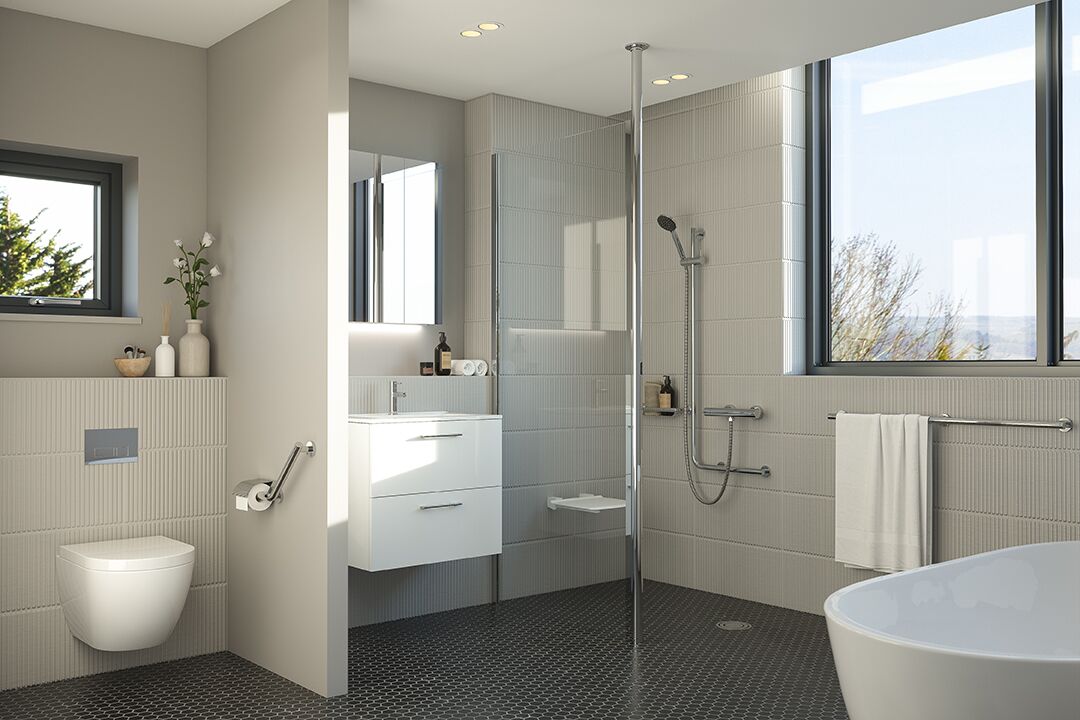
A professionally installed, fully accessible wet room typically costs £8,000 to £14,000+ in the UK in 2026, supply and fit. A standard conversion with safety vinyl, gravity drainage and standard sanitaryware sits at £8,000 to £10,000+; most of the wet rooms we install for mobility land between £10,000 and £12,000 once pumped drainage, upgraded flooring and rails are included; and a fully bespoke room with floor-to-ceiling wall panels, underfloor heating, new WC and basin and specialist equipment runs from £12,000 to £14,000+ and beyond. Eligible customers pay 0% VAT on top of those figures.
Those are typical ranges rather than quotes: every job is surveyed and priced individually. This guide explains what sits in each band, what changes the price from one house to the next, what a wet room costs to run, and how to compare quotes so nothing is added halfway through the job.
A note on the prices in this guide
The figures on this page are typical ranges to help you plan, not quotes. Every accessible bathroom we fit is designed around the person using it, so once our surveyor has visited and understood what you need, the price of your bespoke solution can be quite different from the ranges shown here. The home survey is free, and the quote you receive afterwards is a fixed price.
Wet room cost at a glance (2026)
| Wet room type | Typical installed cost | What’s included |
|---|---|---|
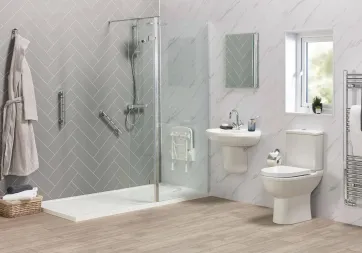
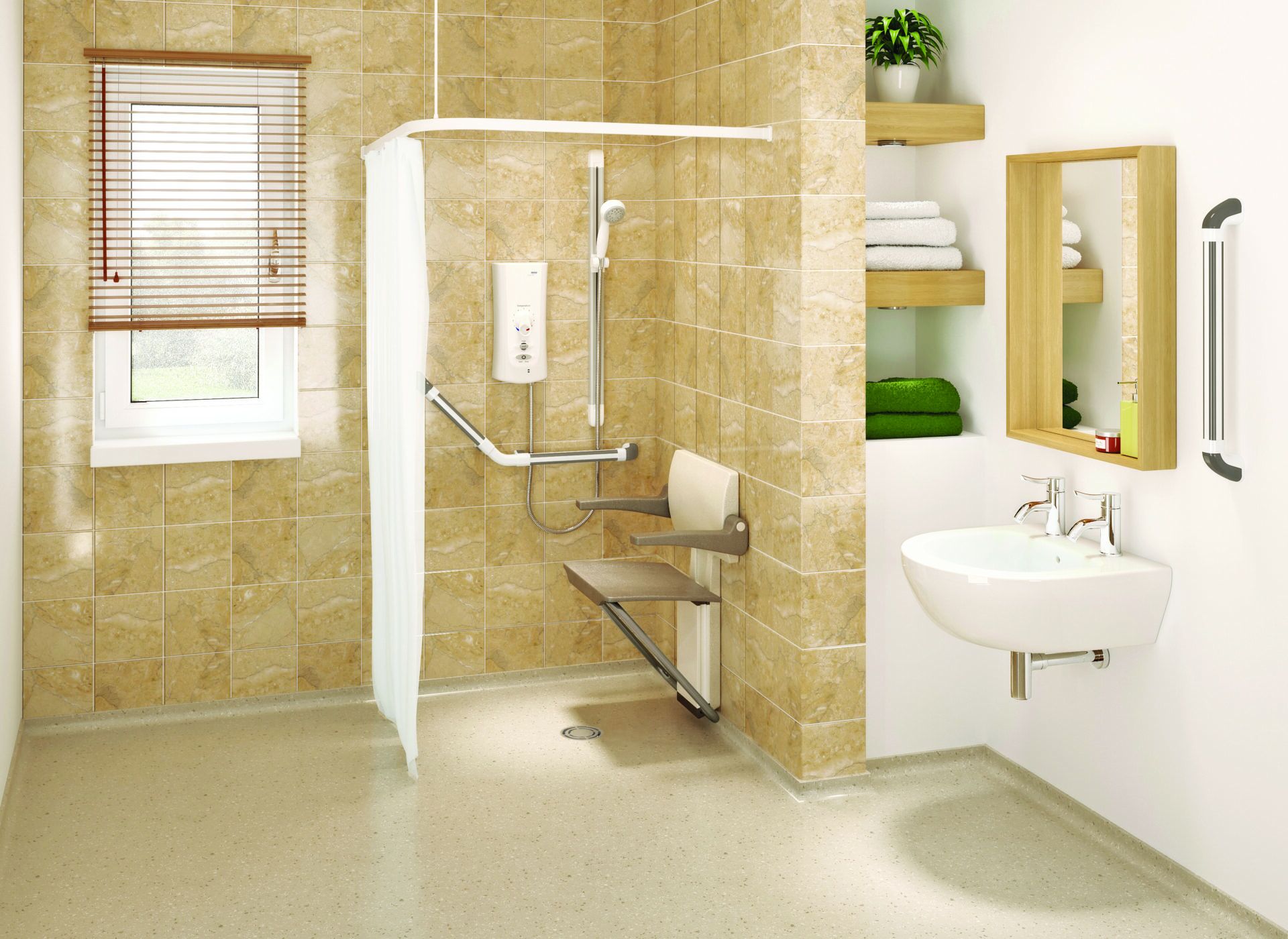
| Standard accessible conversion | £8,000–£10,000+ | Bath or cubicle removed, floor formed to fall and fully tanked, gravity drainage, safety vinyl floor, wall panels in the shower zone, thermostatic shower, screen, grab rail and seat |
| Mid-range mobility wet room | £10,000–£12,000+ | As above plus pumped drainage where there is no fall, high-performance safety flooring, extra rails, half-height doors or a wider shower zone, upgraded shower and fittings |
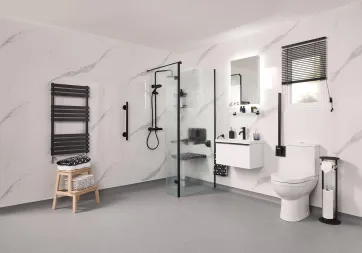
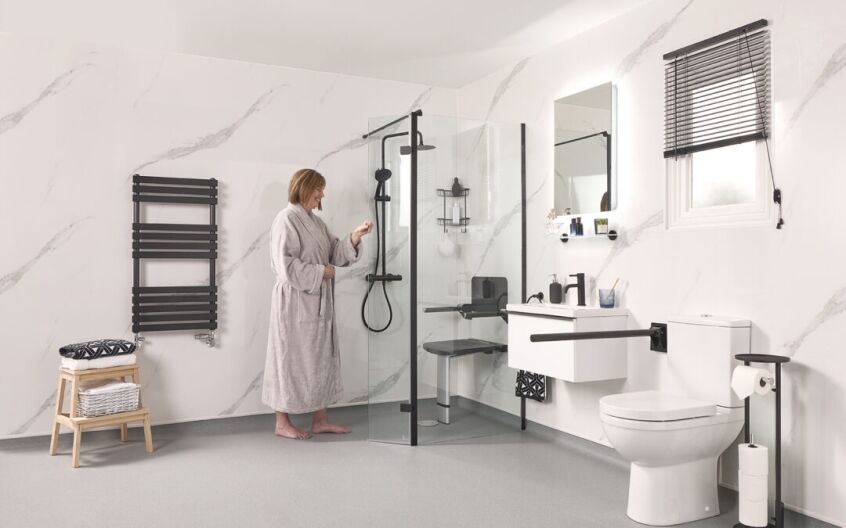
| Bespoke wet room | £12,000–£14,000+ | Floor-to-ceiling wall panels or tiling, underfloor heating, new WC and basin, layout changes, premium finishes |
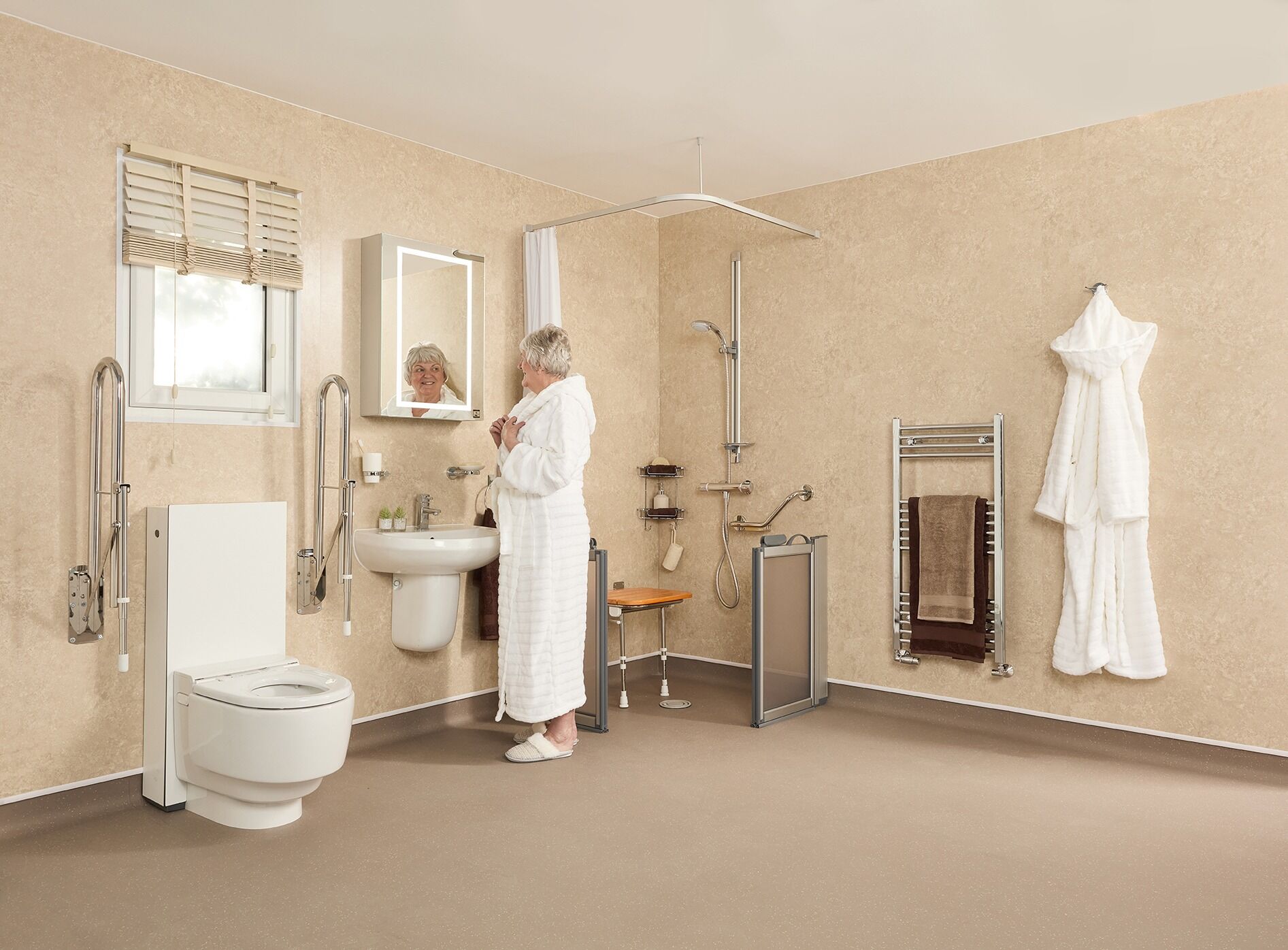
| Specialist wet room | £14,000+ | Bespoke room plus specialist equipment such as height-adjustable basins, wash-dry toilets, shower trolleys, ceiling track hoists or body dryers |
Prices include the survey, materials, specialist labour, electrics, waste removal and our lifetime installation guarantee, before VAT relief. A tray-based walk-in shower in the same room is typically £2,000 to £3,500+ less; see our walk-in shower cost guide.
Why wet room prices online are so confusing
Search for wet room prices and you’ll find calculators saying “£3,000 to £15,000+”. The £3,000 figure is usually a small en-suite done by a general builder with a tray former, a vinyl floor and no accessibility features; the £15,000 figure is a large bespoke room with everything moved. Neither tells you what a safe, tanked, mobility-ready wet room in your house will cost. The bands above are where almost every accessible wet room we install lands, and the difference between them is explained by a handful of factors below.
Want a fixed price for your bathroom?
Online calculators can't see your floor, drainage or electrics. Our surveyor can. Book a free home visit, anywhere in the UK, and get a fixed-price quote that doesn't change once work starts.
 Get a Free Fixed-Price Quote
Which? Trusted Trader · Free home visits across the UK · Lifetime installation guarantee · 0% VAT if you qualify
What a wet room quote should include
| Stage | What it covers | Why it affects the price |
|---|---|---|
| Survey and design | Floor construction, direction of joists, drainage fall to the soil stack, water pressure, electrics, door widths and turning space | A proper survey is what makes a fixed price possible |
| Strip-out | Removing the bath or cubicle, old flooring, tiles and panels; disposal | Rot or damp found under the old bath has to be fixed before tanking |
| Floor forming | A structural former recessed between timber joists, or a channel cut into concrete screed, so the whole floor falls to the drain | This is the structural work that makes a wet room a wet room |
| Drainage | Gravity waste, or a pumped waste where there isn’t enough fall | The biggest single swing between two quotes |
| Tanking (waterproofing) | Chemically bonded membrane over the whole floor and up the walls | Where cheap wet rooms fail; a leaking wet room rots joists |
| Flooring | Slip-resistant safety vinyl, or tiles | Vinyl is quicker to lay and usually safer; tiling takes roughly twice the labour |
| Walls | Waterproof wall panels or tiles, in the shower zone or floor to ceiling | Panels have no grout and fit in a fraction of the time |
| Shower and fittings | Thermostatic shower, screen or half-height doors, fold-down seat, grab rails, accessible WC and basin if replaced | Specified to your mobility, not a standard kit |
| Electrics | Extractor fan, lighting, shower circuit, underfloor heating, Part P certification | Adds to the labour but is required for safety |
The six things that change the price
1. Timber or concrete floor
Ground-floor concrete is usually the simpler wet room job: we cut a channel into the screed for the drain and form the fall on top. Upstairs timber floors need the boards lifted, joists checked and reinforced, and a structural former fitted between them. If the joists run the wrong way for the waste, a pumped waste is needed. This is the reason two similar bathrooms can be quoted £2,000 apart.
2. Gravity or pumped drainage
If the waste can run downhill to the soil stack, the floor drains by gravity: simpler, cheaper and lower maintenance. If the drain is a long way from the stack, the floor can’t be cut, or there isn’t enough fall, we fit a wet room pump. It adds from a few hundred pounds to over a thousand depending on the routing, but it is often what makes a level floor possible at all.
3. Vinyl or tiles
Safety vinyl comes on a roll, is welded at the seams, is fully waterproof and has the slip ratings a mobility bathroom needs. Tiling a wet room floor takes about twice as long and needs a specialist tiler, and tile prices have risen. If you want the tiled look, expect it to move the job up a band; vinyl in a stone or timber effect gets close for much less.
4. Wall panels or tiles, and how far up the wall
Waterproof wall panels fit in days rather than a week, have no grout to discolour or clean, and can often go over existing surfaces. Panelling just the shower zone is the cheapest safe option; floor-to-ceiling panelling of the whole room is the bespoke finish that pushes into the £12,000+ band.
5. Keeping or moving the toilet and basin
Leaving the WC and basin where they are keeps the price down. Moving a soil pipe, adding a wall-hung basin at wheelchair height or fitting a wash-dry toilet each add labour and materials. Our guide to small wet room ideas shows what fits without moving anything.
6. Electrics and heating
A new extractor, LED lighting, an electric shower circuit or underfloor heating all need a qualified electrician and Part P certification. Underfloor heating is the extra most customers are glad they added: it dries the floor quickly, which matters for safety, and warms a room that no longer has a bath to hold the heat.
Wet room running costs
The question we hear most is whether electric underfloor heating is expensive to run. In a modern, insulated wet room it isn’t: warming the floor for an hour morning and evening costs in the region of 10p to 15p a day at 2026 tariffs, and the floor dries within minutes of a shower. A wet room shower itself costs the same to run as any other shower; the electric-versus-mixer choice is the same as it would be in a cubicle.
Is a wet room a good investment?
Done well, yes. A clinical-looking, poorly finished wet room can put buyers off and knock a few percent off a sale. A modern, well-designed wet room is a sought-after feature for older buyers and families alike and rarely reduces value. Our guide on whether a wet room devalues a property looks at this in detail, and our disabled wet room ideas show what a good one looks like.
Wet room or walk-in shower?
A walk-in shower waterproofs a tray zone; a wet room tanks the whole floor and forms it to fall, so it costs £2,000 to £3,500+ more at the same finish level. The wet room is the right choice for wheelchair users, shower chairs, carer-assisted washing and anyone who needs the whole floor level and open. If everyone using the room can manage a low step, a tray-based walk-in shower keeps more of the floor dry for less money. Our wet room vs walk-in shower vs bath comparison walks through the decision, and our wet rooms page shows the options.
Five ways to keep the cost down without cutting safety
- Choose safety vinyl over tiles. Cheaper to buy, faster to fit, and usually the safer surface.
- Keep the layout. Leaving the toilet and basin where they are avoids moving soil pipes.
- Panel the shower zone rather than the whole room. Full-height panelling is a finish, not a safety feature.
- Use standard-size screens. 700mm, 800mm and 900mm glass is far cheaper than custom-cut panels.
- Claim VAT relief. The biggest saving of all, explained next.
VAT relief: the 20% most customers save
If the wet room is being installed because of a long-term condition or disability, the supply and installation can be zero-rated for VAT under HMRC VAT Notice 701/7. You don’t need to be registered disabled or receive a benefit; arthritis, heart conditions, Parkinson’s, MS, dementia and significant balance problems all commonly qualify. On a £9,000 wet room the standard price would be £10,800; with relief it stays at £9,000. You sign a short declaration at the point of order and we deduct the VAT from the invoice; there is nothing to claim back. Our VAT exemption guide covers who qualifies and what is included.
Grants and other funding
A council Disabled Facilities Grant can fund a wet room for people with a permanent disability and low income and savings, but it is means-tested (savings above £23,250 usually rule it out) and the assessment and approval process commonly takes many months, so most of our customers use VAT relief and go ahead privately. Attendance Allowance and PIP are not means-tested and can be put towards the work. Our guide to who is entitled to a wet room compares the routes.
Note: Grants wording along the lines of Grant applications can be complex and lengthy, often taking 1-2 years to process and requiring detailed eligibility and project criteria. Therefore, we are unable to support these processes and thus our services are focused on clients funding their projects personally so that we can work in a reasonable timescale to offer our clients the best service. We recommend you contact your local council for assistance.
How to compare wet room quotes
- Is the whole floor tanked, and with what system? A quote that skips tanking or uses a tray former without a membrane is not a wet room quote.
- Has anyone checked the drainage fall? If not, a pump will appear as an extra once the floor comes up.
- Is it supply and fit, including strip-out and disposal?
- What are the exclusions? Replastering, moving a radiator, a new door, decoration and electrics are the usual items left out.
- Is the shower valve thermostatic? Essential for older users; a manual mixer is not.
- What does the guarantee cover? Ours is a lifetime installation guarantee; many are twelve months on labour.
- Has VAT relief been applied? Ask whether the price is before or after, and who handles the declaration.
Frequently asked questions
How much does a wet room cost in the UK in 2026?
A professionally installed accessible wet room costs £8,000 to £14,000+ supply and fit. Standard conversions sit at £8,000 to £10,000+, most mobility wet rooms at £10,000 to £12,000+, and bespoke rooms with full-height panelling, heating and new sanitaryware at £12,000 to £14,000+ and above. Eligible customers pay 0% VAT on top.
How much does a small wet room cost?
A small wet room in a standard bathroom or en-suite usually sits in the £8,000 to £10,000+ band, because there is less floor to form and tank and less wall to cover. Size matters less than the floor type, drainage and finish.
Is a wet room cheaper than a walk-in shower?
No. A wet room is usually £2,000 to £3,500+ more than a tray-based walk-in shower at the same finish level, because the whole floor has to be formed to fall and tanked. The extra buys a completely level, open floor.
Is a wet room cheaper than a walk-in bath?
Often, yes, once the bath has a powered lift. A standard walk-in bath at £6,000 to £7,500+ is cheaper than a wet room; a powered-lift bath at £9,000 to £12,000+ is comparable, and a wet room has no moving parts to maintain. See our walk-in bath cost guide.
Why are some wet room quotes so cheap?
They usually skip or shortcut the tanking, use a tray former without a membrane, or leave out strip-out, disposal and electrics. If a wet room leaks it rots the floor joists, so the tanking is the one stage not to economise on.
Does a wet room add value to a home?
A modern, well-finished wet room rarely reduces value and is attractive to older buyers and families. A basic, clinical-looking room can put some buyers off, which is a reason to spend on the finish rather than cut it.
Is underfloor heating in a wet room expensive to run?
No. In an insulated wet room, heating the floor for an hour morning and evening costs roughly 10p to 15p a day at 2026 tariffs, and it dries the floor quickly, which is a safety benefit.
Can I get VAT relief on a wet room?
If the wet room is being installed because of a long-term condition or disability, yes. The work is zero-rated under HMRC VAT Notice 701/7 once you sign an eligibility declaration; there is no application or waiting.
Can I get a grant for a wet room?
A Disabled Facilities Grant can cover a wet room for people with a permanent disability who pass a means test, but the process commonly takes many months. Most customers use VAT relief and Attendance Allowance or PIP instead and go ahead privately.
Is this the price I’ll pay?
No. The figures in this guide are typical ranges to help you plan. Every accessible bathroom we fit is designed around the person using it, so once our surveyor has visited and understood what you need, the price of your bespoke solution can be quite different from the ranges shown. The home survey is free and the quote you receive afterwards is a fixed price.
A note on the prices in this guide
The figures on this page are typical ranges to help you plan, not quotes. Every accessible bathroom we fit is designed around the person using it, so once our surveyor has visited and understood what you need, the price of your bespoke solution can be quite different from the ranges shown here. The home survey is free, and the quote you receive afterwards is a fixed price.
Get a fixed-price quote for your wet room
Online calculators can’t see your floor, your joists, your drainage fall or hidden water damage, which is why they are so often wrong. We survey the bathroom, confirm whether you qualify for VAT relief, and give you a fixed price that doesn’t change once the work starts.
Or call us free on 0800 955 8810.

Kian Carvell
Sales & Marketing Director at EA Mobility
Kian has overseen hundreds of accessible bathroom installations across the UK and specialises in mobility-led bathroom design and cost optimisation.
Free · No obligation · UK-wide
Ready for a fixed price, not an estimate?
Tell us a little about your bathroom and one of our own surveyors will visit at a time that suits you, anywhere in the UK. You'll get honest advice and a fixed-price quote to consider in your own time.
- Rated 4.9 by Which? Trusted Traders
- Our own installers, never subcontracted
- 0% VAT on eligible installations
- Lifetime installation guarantee
Prefer to talk? Call free on 0800 955 8810