

Last Updated on October 13, 2026
If you are struggling to get in and out of the bath, a bath lift at £300 to £600 looks like the obvious answer next to a walk-in bath at £6,000 and up. Sometimes it is. But we have replaced a lot of bath lifts for customers who bought one, disliked it and upgraded within a year, so this is the honest comparison: what each one does, what each one can’t do, and how to tell which you need before you spend anything.
A note on the prices in this guide
The figures on this page are typical ranges to help you plan, not quotes. Every accessible bathroom we fit is designed around the person using it, so once our surveyor has visited and understood what you need, the price of your bespoke solution can be quite different from the ranges shown here. The home survey is free, and the quote you receive afterwards is a fixed price.
At a glance
| Feature | Bath lift (chair) | Walk-in bath (door) |
|---|---|---|
| Getting in | You still lift both legs over the 540mm rim while seated on the chair | Step through a 150mm to 200mm door threshold |
| Water depth | Shallow: the seat sits 70mm to 100mm above the bath floor, so knees and torso are often out of the water | Full depth: you sit at the bottom or on a moulded seat designed for it |
| Warmth | Poor for a soak; good for a wash | Excellent |
| Stability | Suction cups on the bath floor; can shift on textured or unclean surfaces | Fixed to the floor and wall |
| Upkeep | Battery handset to charge; chair lifted out to clean the bath | Standard cleaning; door seal checked |
| Installation | None; place it in the bath | 2 to 4 days |
| Cost (2026) | £300 to £600 | £6,000 to £12,000+ installed |
| Best for | Renters, temporary need, good leg lift but weak sit-to-stand | Painful or unsafe leg lift, wanting a proper soak, a permanent fix |
The bath lift: what it is and what it isn’t
A bath lift is a battery-powered seat that sits inside your existing bath on suction cups. You sit on it at rim height, swing your legs over, and press a button to lower yourself into the water; at the end you press again to rise back up. It needs no installation, can be bought online, and comes with you if you move house.
The complaints we hear are consistent. The lift mechanism sits under the seat, so the seat can’t reach the bath floor: you sit 70mm to 100mm higher than the bottom, which leaves knees and upper body in cold air rather than warm water. The thick backrest pushes you forward and takes legroom, so taller users find their knees out of the water too. The suction cups need a smooth, clean bath surface and can shift on textured acrylic. And it has to be lifted out to clean the bath, which is awkward for exactly the people who bought it.
The bigger issue is the one the adverts skip: a bath lift does not remove the rim. You still have to lift both legs over a 540mm side while balanced on a plastic seat. If your hips are stiff or your balance is poor, that swing is the risky moment, and the lift doesn’t help with it.
Finding the bath harder to get in and out of?
A walk-in bath or low-level bath gives you back a safe, comfortable soak. Book a free home visit: we measure the room, check whether you qualify for 0% VAT, and leave you a fixed-price quote to think about in your own time.
 Book a Free Home Visit
Which? Trusted Trader · Free home visits across the UK · Lifetime installation guarantee · 0% VAT if you qualify
The walk-in bath: what changes
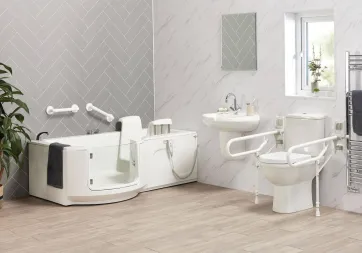
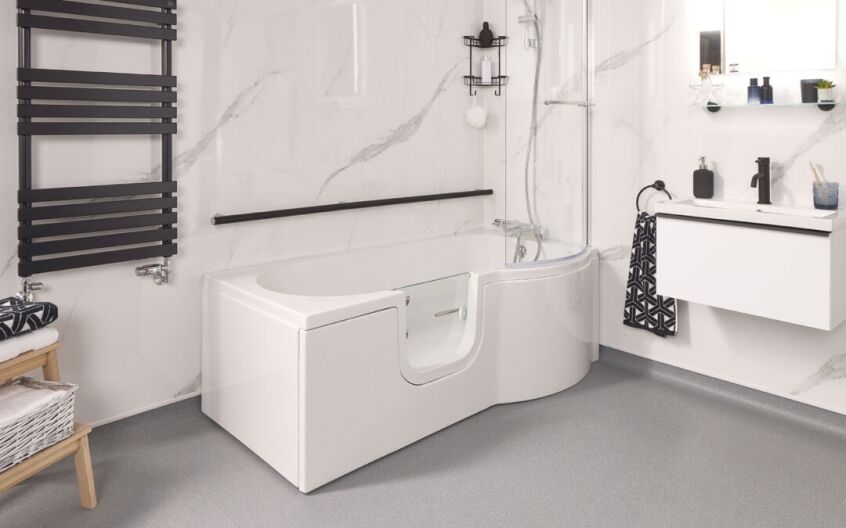
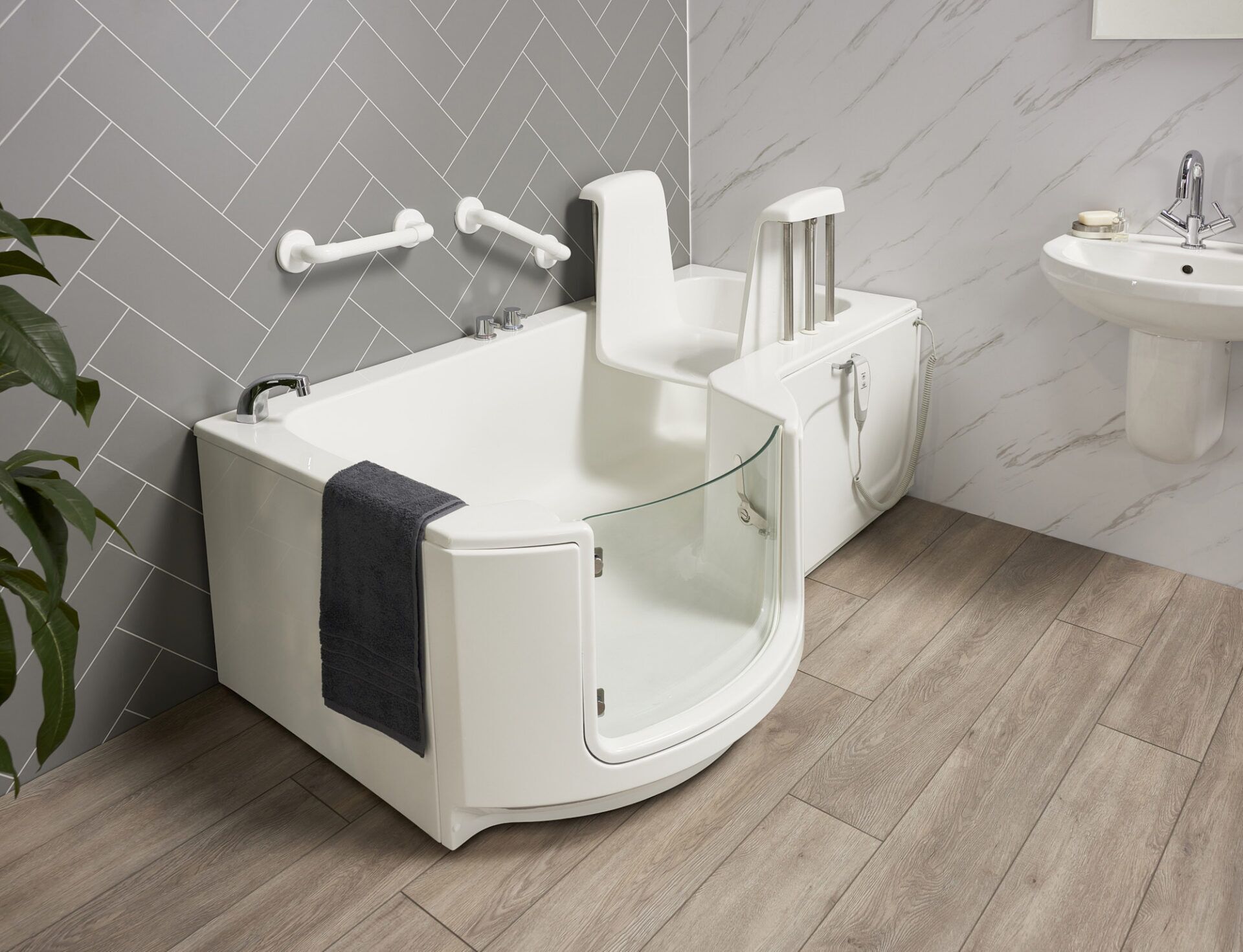
A walk-in bath replaces the tub with one that has a watertight door, so you step through a low threshold instead of over a rim, then sit on an integrated seat or lie down in a full-length model and fill the bath around you. Because you sit at the bottom or on a moulded seat designed for depth, you get a proper soak. The bath is fixed to the floor and wall, so nothing shifts. There is no battery, no chair to lift out, and nothing to set up each time.
If your strength or balance means you can’t lower yourself or stand back up, a bath with an integrated powered lift does what a bath lift does, but built into the bath, lowering you to the bottom and raising you out on a fixed mechanism rather than suction cups.
The trade-offs are cost and disruption: it is a renovation, priced at £6,000 to £7,500+ for standard compact and full-length models, £7,500 to £9,000+ for deep-soak and glass-door models, and £9,000 to £12,000+ with a powered lift, before VAT relief, and it takes two to four days to fit. Our walk-in bath cost guide breaks the prices down, and our installation guide explains the process.
Who a bath lift is right for
- Renters who can’t change the bathroom.
- A temporary need, for example recovering from surgery, where a permanent change isn’t justified.
- Good leg lift, weak sit-to-stand. If you can swing your legs over the rim confidently but struggle to get up from the bottom, a lift solves the specific problem you have.
- A tight budget where the alternative is not bathing at all. A lift used carefully is far safer than struggling unaided.
Who needs a walk-in bath
- Lifting your leg over the rim is painful or unsafe. A lift doesn’t help with this; a door removes it.
- You want hydrotherapy. Warm water eases arthritis and joint pain only if the joints are in it. Our guide to hydrotherapy at home explains why depth matters.
- Balance or dizziness. A fixed bath with a seat and rails is more stable than a chair on suction cups.
- You want a permanent answer with no charging, no lifting out and nothing to set up.
A quick test before you buy anything
Sit on a stack of books about 100mm high in your empty bath. That is roughly how high a bath lift seat sits. Is enough of you below the rim to be comfortable and warm? Then stand at the side of the bath and lift each foot to rim height, holding the wall. If either test is uncomfortable, a bath lift will not fix the problem you actually have.
Don’t buy twice
The most expensive bathroom adaptation is the one you pay for twice. A bath lift that goes unused for six months and is then replaced by a walk-in bath is £500 wasted, and six months of not bathing properly. If you are unsure, our surveyor will assess your leg lift and sit-to-stand in your own bathroom and tell you plainly which option fits; if a lift is enough, we will say so.
Frequently asked questions
Is a bath lift as good as a walk-in bath?
No, and it isn’t trying to be. A bath lift lowers and raises you inside your existing bath but leaves the rim in place and keeps you 70mm to 100mm above the bath floor. A walk-in bath removes the rim with a door and gives a full-depth soak. A lift is a good temporary or budget fix; a walk-in bath is the permanent solution.
How much does a bath lift cost?
Typically £300 to £600 for a battery-powered lift you fit yourself. A walk-in bath costs £6,000 to £12,000+ installed, before VAT relief.
Do you still have to lift your legs over the bath with a bath lift?
Yes. You sit on the chair at rim height and swing both legs over the 540mm side. For people with stiff hips or poor balance that is the risky moment, and a lift does nothing to reduce it.
Why don’t bath lifts go all the way to the bottom?
The lifting mechanism sits under the seat and needs room to fold, so the seat stops 70mm to 100mm above the bath floor. That is why users complain of cold knees and a shallow soak.
Can a walk-in bath have a lift as well?
Yes. Baths with an integrated powered lift lower you to the bottom and raise you out on a fixed mechanism, for people who can’t lower themselves or stand from seated. They sit at the top of the walk-in bath price range.
Is a bath lift covered by VAT relief?
Bath lifts and walk-in baths both qualify for 0% VAT when supplied to someone with a long-term condition or disability for their personal use. For a walk-in bath installation the relief also covers the fitting work; our VAT exemption guide explains how it works.
Is this the price I’ll pay?
No. The figures in this guide are typical ranges to help you plan. Every accessible bathroom we fit is designed around the person using it, so once our surveyor has visited and understood what you need, the price of your bespoke solution can be quite different from the ranges shown. The home survey is free and the quote you receive afterwards is a fixed price.
A note on the prices in this guide
The figures on this page are typical ranges to help you plan, not quotes. Every accessible bathroom we fit is designed around the person using it, so once our surveyor has visited and understood what you need, the price of your bespoke solution can be quite different from the ranges shown here. The home survey is free, and the quote you receive afterwards is a fixed price.
What EA Mobility supplies
EA Mobility designs and installs permanent bathing solutions: walk-in baths, and walk-in baths with an integrated powered lift for people who cannot lower themselves to the bath floor or stand from seated. We do not supply or fit standalone bath lifts — the battery-powered seats compared in this guide. They are included here so you can weigh the options fairly; they are widely available from mobility retailers if a lift is the right answer for you. If you need a permanent solution, our free home survey will confirm which bath suits you and give you a fixed price.
Find out which one you need
Book a free, no-obligation home visit. Our surveyor assesses your leg lift, balance and sit-to-stand in your own bathroom, confirms whether you qualify for VAT relief, and gives you a fixed-price quote for a permanent solution if that is what you need.
Or call us free on 0800 955 8810.

Simon
Clients’ Needs Assessor
Simon brings extensive experience from the healthcare sector, having spent over 25 years working alongside physiotherapists and occupational therapists.
Free · No obligation · UK-wide
Ready for a safer, easier bathroom?
Tell us a little about your bathroom and one of our own surveyors will visit at a time that suits you, anywhere in the UK. You'll get honest advice and a fixed-price quote to consider in your own time.
- Rated 4.9 by Which? Trusted Traders
- Our own installers, never subcontracted
- 0% VAT on eligible installations
- Lifetime installation guarantee
Prefer to talk? Call free on 0800 955 8810